Chat to a Andean Road Peru
The Pachamama ceremony is one of the most meaningful ancestral traditions preserved in the Peruvian Andes. It is a practice of gratitude toward Pachamama, or Mother Earth, and reflects a worldview in which nature is closely connected to human life. Through offerings, prayers, and symbolic acts, Andean communities recognize everything they receive from the land and express their desire to maintain a respectful relationship with it.
Although the tradition has ancient roots, it continues to form part of cultural life in different Andean communities. The way it is performed can vary according to the region, family, or local customs, but its central message remains connected to gratitude, reciprocity, abundance, and respect for nature. Understanding this tradition provides travelers with a deeper perspective on the cultural heritage they encounter in Peru.
You my also like:Top 10 Types of Potatoes Most Commonly Found in Peru
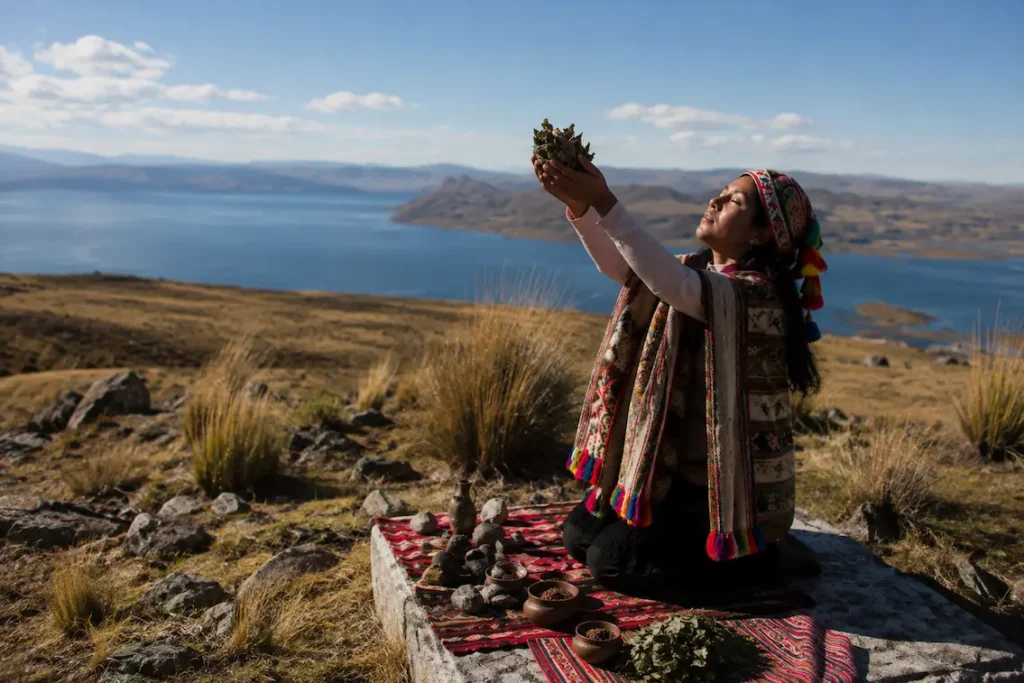
The Pachamama ceremony is an ancestral Andean ritual dedicated to Mother Earth. It is often understood as a payment or offering to the Earth, through which people express gratitude for food, water, crops, animals, and the natural resources that make life possible. Rather than being a single standardized ritual, it can take different forms depending on the community and the purpose of the ceremony.
The Pachamama ceremony is based on the idea that receiving from nature also creates a responsibility to give something back. For this reason, offerings are prepared with care and presented respectfully. Some ceremonies are held for agricultural reasons, while others may be connected to important dates, family events, community celebrations, or a desire to ask for protection and prosperity.
This tradition is particularly important because it shows that Andean spirituality is closely connected to everyday life. The land is viewed as something worthy of respect and gratitude, and the relationship between people and nature remains an important part of cultural identity.
Pachamama is commonly translated as Mother Earth, but her meaning within Andean culture is broader than the physical ground. She is associated with fertility, nourishment, agriculture, life, and the natural environment that sustains communities. For many Andean peoples, the Earth is not simply a resource to be used; it is part of a living relationship that requires respect and reciprocity.
This understanding is closely connected to the Andean principle of ayni, commonly associated with mutual exchange and reciprocity. The idea can be observed in relationships between people as well as in the relationship with nature. When communities receive nourishment from the land, gratitude and offerings become ways of recognizing that connection.
Mountains, known as apus, also have an important spiritual presence in Andean traditions. They are often regarded as powerful beings that protect and accompany communities. This helps explain why ceremonies may take place in landscapes surrounded by mountains, agricultural fields, or other locations considered meaningful.
For travelers, these beliefs can transform the way they see the Peruvian Andes. A landscape becomes more than a destination; it is part of a cultural system with its own history, symbolism, and relationship with local communities. A local Peru tour operator can help travelers discover cultural experiences with greater context and respect.
August 1 is the most widely recognized date for honoring Pachamama in many Andean communities. The celebration is closely related to the agricultural calendar and is particularly significant in the highlands. During this period, communities may gather to make offerings and express gratitude for what the Earth provides.
However, practices connected with Pachamama are not restricted to one day. Different communities preserve their own customs, so the date, location, and form depend on local traditions.
In Peru, these practices are especially associated with the Andes, including Cusco and surrounding highland communities. Offerings may be made in agricultural fields, homes, ceremonial spaces, near mountains, or other places with cultural significance. Similar traditions can also be found in other Andean countries, although each region has its own expressions.
For visitors traveling through Cusco, understanding when these celebrations take place can help them plan a cultural experience without treating the tradition as a simple tourist attraction. Respect for local communities and their customs should always be part of the experience.
You my also like:Top 5 best viewpoints in Cusco
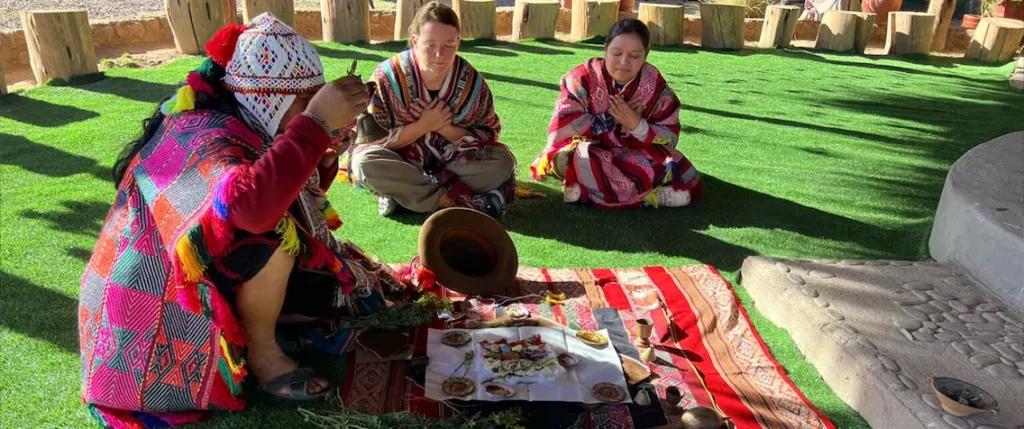
There is no single procedure followed by every community. A Pachamama ceremony can vary according to the location, the spiritual guide, the purpose of the offering, and local customs. Even so, many ceremonies share the preparation of symbolic offerings, words of gratitude, prayers, and a respectful connection with the Earth.
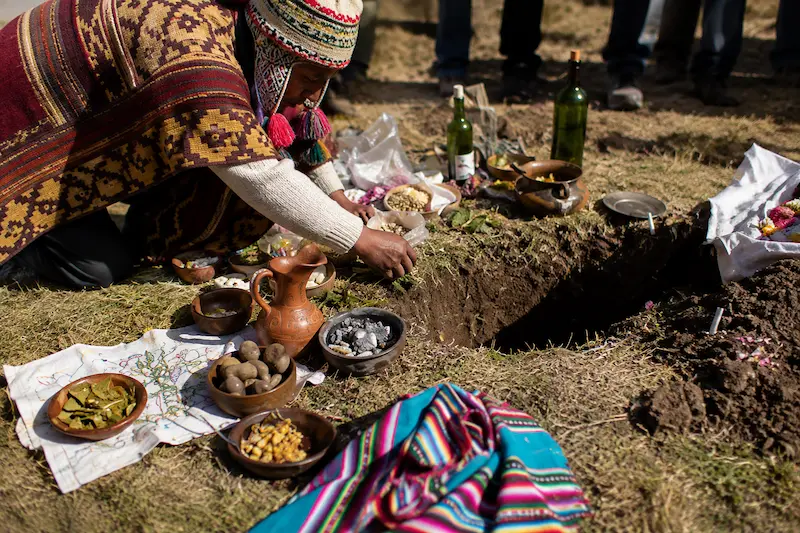
A traditional offering may be arranged on a woven textile before being presented to Pachamama. The person leading the ritual may explain the elements and pronounce prayers or words of gratitude. Depending on local customs, the offering may be placed into the earth or selected elements may be burned.
Common elements may include:
The meaning of these elements is more important than their material value. Each offering represents an act of recognition toward nature and forms part of a broader relationship based on reciprocity. Visitors should also remember that the exact combination of offerings is not universal and should not be assumed to represent every Andean community.
Offerings are one of the most recognizable parts of the Pachamama ceremony because they make the principle of reciprocity visible. Instead of only asking for health, abundance, or protection, participants first acknowledge what they have received from the Earth. The offering therefore becomes an expression of gratitude as well as a request for continued harmony.
In some communities, an offering known as a despacho is carefully prepared with numerous symbolic ingredients. Its contents and arrangement can vary considerably, and the person conducting the ritual may determine which elements are appropriate for the occasion. Because of this diversity, it is better to understand the symbolism behind the practice than to expect an identical ritual everywhere.
Reciprocity helps explain why these traditions continue to have cultural importance. In Andean communities, relationships have historically been strengthened through cooperation, mutual support, and shared responsibilities. The same principle extends to the relationship between people and the natural world.
This idea also gives the ceremony a broader meaning. It is not simply a moment for making a request; it is an opportunity to recognize the connection between human life and the environment. For travelers, understanding this perspective can make the experience more meaningful and encourage a more respectful approach to Andean culture.
You my also like:The chincanas: the mysterious underground tunnels of Cusco
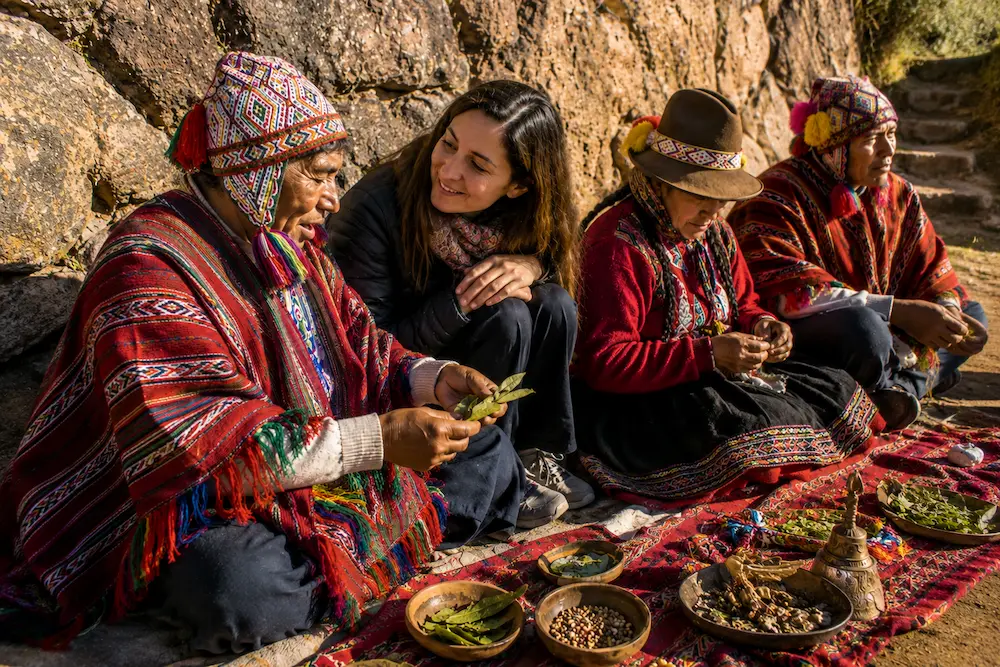
Travelers may have opportunities to participate in or observe a Pachamama ceremony in Peru, particularly through cultural experiences organized with local communities or knowledgeable Andean guides. However, participation should always depend on the wishes of the people conducting the ceremony. Some rituals are private and should not be treated as tourist activities.
Before attending, visitors should learn what the experience involves and follow the local guide's instructions. Photography may not always be appropriate, and ceremonial objects should never be touched or moved without permission. Respectful questions can help travelers understand the ritual rather than focusing only on its visual aspects.
A cultural experience can be combined with other activities in the region. Travelers planning Inca Trail Treks can learn about the landscapes and traditions that have shaped the Andes, while those exploring Cusco can include cultural experiences alongside archaeological and historical visits.
Experiencing this tradition can provide travelers with a different way of understanding Peru. The country is often associated with Machu Picchu, archaeological sites, mountains, and spectacular landscapes, but its cultural heritage also includes living traditions that continue to connect communities with their environment.
Cusco and the surrounding Andes offer particularly valuable opportunities to learn about these customs. Travelers visiting the region can combine archaeological exploration with experiences that introduce them to local beliefs, agricultural traditions, and community life. Machu Picchu tours can therefore become part of a broader journey that includes not only famous landmarks but also the cultural context of the people and landscapes surrounding them.
The most valuable aspect of the experience is often the understanding it creates. Learning why offerings are made and how reciprocity shapes Andean thought allows visitors to see the region beyond sightseeing.
It is important to approach the tradition with humility. The Pachamama ceremony is not a performance created exclusively for visitors; it is a living cultural practice whose meaning comes from the communities that preserve it. Travelers should respect local customs, listen carefully to explanations, and understand that each community may have its own way of honoring Mother Earth.
For anyone interested in Peru's cultural heritage, learning about Pachamama can add another dimension to a journey through the Andes. It reveals a worldview shaped by gratitude, community, reciprocity, and a deep connection with nature, while showing how ancestral knowledge continues to have meaning in contemporary life.
Leave a comment