Chat with our team
The musical instruments of Peru include Andean flutes and string instruments, Afro-Peruvian percussion and Amazonian instruments used in both performance and communication. The quena, zampoña, charango, cajón and manguaré illustrate this variety. Their significance comes not only from their sound, but also from the musicians, communities and occasions associated with them.
Understanding these instruments adds another dimension to a journey through Peru. A performance becomes more interesting when you can distinguish a flute melody from a string accompaniment or recognize how different percussion sounds interact. This article introduces ten examples, explains how they produce sound and offers practical ways to listen to them with greater attention and cultural understanding.
The musical instruments of Peru belong to histories that cannot be reduced to a single civilization or region. Some have pre-Hispanic antecedents, while others developed through colonial encounters, African-descended communities and the local adaptation of instruments introduced from Europe.
These histories also extend beyond modern borders. An instrument can hold an important place in Peruvian culture without being exclusive to Peru. Likewise, a familiar instrument may be played differently from one community to another, with changes in construction, repertoire and the occasions on which it is heard.
Archaeological evidence establishes that music formed part of life in the Andes long before the Inca Empire. The Metropolitan Museum of Art describes bone wind instruments from Caral and representations of shell trumpets at Chavín de Huántar. These examples show that ancient musical practices developed in different places and periods.
However, evidence for an ancient instrument does not reveal every detail of the music performed with it. Its material, shape and archaeological context can inform research, but they do not automatically establish the exact melodies, performance arrangements or meanings of every sound.
This distinction is useful when visiting museums or archaeological sites. Ask whether an explanation refers to an excavated object, a historical representation, experimental research or a contemporary performance inspired by the past.
Living Indigenous musical traditions also deserve attention in their own right. Musicians are not simply reproducing archaeological evidence; they learn, perform and develop practices within communities. Present-day interpretation should therefore be understood through the people who maintain it, rather than described only as an echo of ancient times.
Afro-Peruvian musical heritage is essential to understanding the country’s percussion traditions. The cajón, cajita and quijada appear in Ministry of Culture publications and in research on Lima’s musical history. Their importance involves performance knowledge and cultural transmission, not simply the physical objects.
Musical exchange also helped shape Andean traditions. Peru’s Ministry of Culture describes instruments of European origin, including the harp, violin and guitar, as having been adopted and adapted by Quechua populations. Their established local roles demonstrate why foreign ancestry does not prevent an instrument from becoming part of regional heritage.
For travelers, the most useful approach is to ask what makes a particular performance distinctive. Which repertoire is being played? Where did the musicians learn? What changes when the same instrument appears in a different ensemble?
These questions lead beyond a simple division between “original” and “introduced.” They make room for the creative work through which musicians give instruments new roles and recognizable local styles.
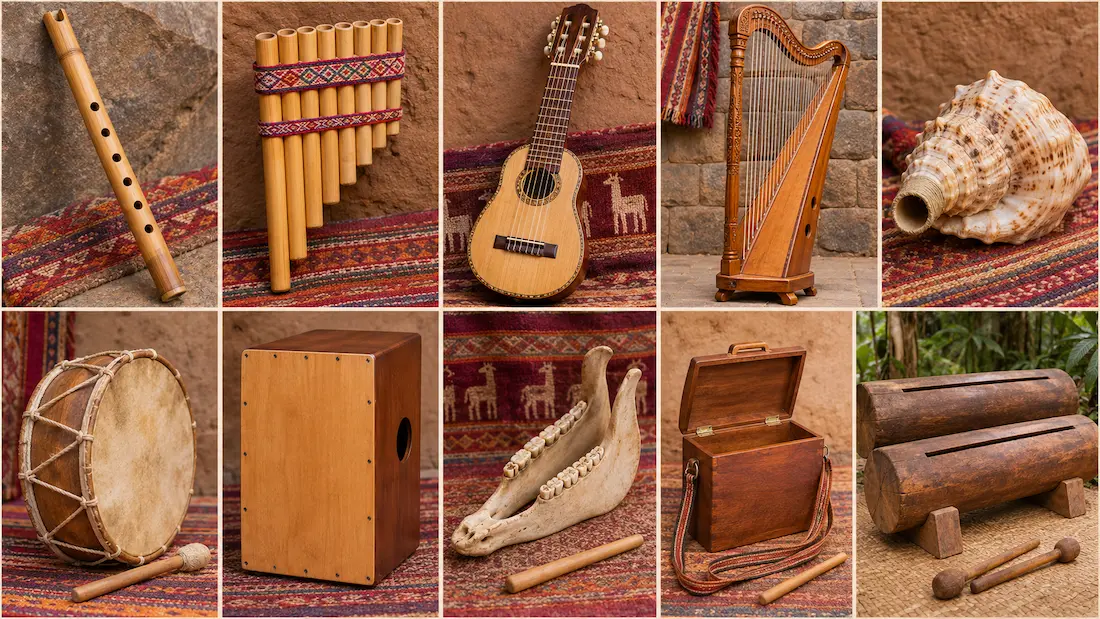
The following musical instruments of Peru offer an introduction to several traditions rather than a complete national inventory. Wind, string and percussion instruments appear throughout the list, alongside an Amazonian example whose communicative purpose requires special attention.
For each instrument, consider three things: what vibrates to produce the sound, how the performer controls it and what role it plays in context. These basic questions make unfamiliar instruments easier to understand without assuming that they all follow the same musical conventions.
The quena is a wind instrument played by directing air against a notch at the upper end of a tube. The player changes notes through finger placement and breath control. Unlike a recorder, its sound does not come from blowing through a built-in duct.
Quenas are documented in Peruvian musical traditions and museum collections. The National Museum of the American Indian, for example, holds a quena associated with Cusco. Such records help connect the instrument with particular places without suggesting that it belongs exclusively to one city or country.
When listening, notice how the performer shapes the start and end of each phrase. A note can begin gently or clearly, and the relationship between breath and pitch contributes to the instrument’s expressive character.
Avoid describing every quena performance as mournful or mystical. Those labels can obscure the variety of music being played. A more attentive description identifies what you actually hear: sustained phrases, quick passages, repeated figures or interaction with another musician.
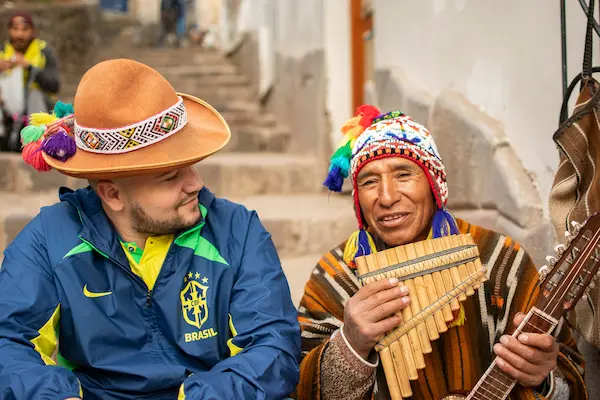
Zampoña is a commonly used name for Andean panpipes, while siku identifies panpipes within particular Andean traditions. These instruments use a set of tubes of different lengths. The player directs air across their openings, with each tube producing a particular pitch.
Names, sizes and performance arrangements vary. Smithsonian archival descriptions document sikus and quenas in recordings from Peru and Bolivia, including sikuri music performed by several siku players with a drummer. This supports understanding the instrument within an ensemble rather than only as a solo object.
Watch how performers coordinate breathing, movement and entrances. The musical effect may depend as much on the relationship between players as on an individual melody.
Do not assume that every set contains the same number of tubes or that all Andean panpipe traditions are identical. If you can speak with a musician, ask what the instrument is called in that setting and how its part relates to the rest of the group.
The charango is a small plucked string instrument associated with the Andes. The player uses the strings for melodic passages, accompaniment and rhythmic strumming, depending on the piece and performance style.
It belongs to a wider Andean musical world rather than fitting neatly inside a single modern national boundary. Smithsonian collections and recordings associate charangos with both Peru and Bolivia, making exclusive claims about national ownership an unhelpful starting point for appreciating the instrument.
During a performance, compare the moments when the musician strums with those when individual notes stand out. These changes can alter the texture of the ensemble without requiring a change of instrument.
If viewing a charango in a workshop, ask about its construction, string arrangement and tuning. A maker can explain the particular model in front of you more accurately than a general description that treats every charango as identical.
The Andean harp is a plucked string instrument whose development in Peru reflects local adaptation. PROMPERÚ describes the introduction of the harp during the colonial period and its incorporation into Andean musical expressions, including huayno. It also notes differences among regional models. peru.travel
Its importance is not explained by European ancestry alone. The repertoire, construction choices and techniques developed by local musicians are central to understanding its place in Peru.
Watch both hands when listening to a harpist. Try to distinguish lower accompaniment from higher figures, then notice whether those roles remain separate or become more closely intertwined.
A useful question is “Which regional style are you playing?” It invites a more specific explanation than asking whether a harp is simply “traditional.” If several recordings are available, comparing them can reveal differences that are difficult to capture in a short verbal description.
The word pututu, also written pututo, is associated here with a shell trumpet. The performer blows through a prepared opening and uses the lips to generate the vibration that resonates through the shell.
Shell trumpets appear in archaeological interpretation of the ancient Andes. The Metropolitan Museum discusses representations at Chavín de Huántar, while a Moche vessel in its collection depicts a figure playing a shell trumpet. These are distinct historical contexts, not evidence of one unchanging ceremony across every period.
When hearing one today, ask what role it has in that particular occasion. A museum demonstration, a community event and a staged presentation may use the same type of object for different purposes.
Its strong, projecting sound can attract attention immediately, but volume is only one aspect to notice. Listen for the length of each call, the pauses between calls and whether another sound or action follows.
The tinya is a drum whose sound comes from a vibrating membrane. It should therefore be distinguished from wooden percussion instruments whose bodies produce the principal vibration.
Its role changes with the musical setting. Ministry of Culture documentation on the T’ikapallana carnival of Tambobamba describes a small drum, or tinya, performed alongside a regional cane flute called lawita. Another Ministry account describes the tinya marking rhythm with the waqrapuku and, in a documented Junín example, a violin.
These examples show why one instrument should not be assigned a universal ensemble or occasion. The surrounding practice gives it meaning.
During a performance, listen to whether the drum maintains a repeating pattern, emphasizes particular moments or follows changes in the song. Also observe the relationship between the percussionist and dancers or singers, while respecting whether the occasion is open to visitors.
The Peruvian cajón is a wooden box-shaped percussion instrument. The musician typically sits on it and strikes its playing surface with the hands, creating contrasting sounds through placement and technique.
Its close relationship with Afro-Peruvian heritage is fundamental to its history. Peru’s Ministry of Culture also describes its international presence in musical settings including flamenco and jazz. Hearing it abroad does not erase the Peruvian traditions through which it developed.
The National Library of Peru’s account of Lima’s musical history explains that the cajón’s place in different genres changed over time, including its increasing role in accompanying valses and polkas during the twentieth century. This cautions against assuming that every current combination has always existed.
When listening, follow one repeating pattern before trying to identify every hand movement. Notice how the player leaves space around the voice or guitar. The instrument’s contribution can involve restraint and timing as much as rapid or forceful playing.
The quijada is a percussion instrument made from an equine jawbone, commonly described as quijada de burro. Its characteristic rattling sound results from the movement of teeth within their sockets when the instrument is struck. Another technique involves scraping across the teeth with a small stick.
It is an idiophone: the instrument’s own material vibrates to produce sound. This differs from the tinya, where a stretched membrane is the principal vibrating element.
The quijada is documented within Afro-Peruvian musical heritage and in historical accounts of ensembles associated with son de los diablos. Its cultural importance should not be reduced to the novelty of its material.
Listen for the contrast between its sustained rattle and the more sharply defined attacks of other percussion. That difference helps explain why combining several instruments can create a richer texture than simply increasing the volume of one.
The cajita rítmica afroperuana is a small wooden percussion instrument with a hinged lid. The performer produces patterns by opening and closing the lid and striking parts of the box with a wooden beater. Ministry of Culture documentation describes it suspended by a strap around the neck.
Its name should not lead readers to confuse it with a small cajón or with similarly named regional instruments. The mechanism and performance practice are distinctive.
For example, the cajita cutervina refers to a different musical practice in Cutervo, Cajamarca, involving a drum, flute and metal triangle. Using the fuller name “Afro-Peruvian cajita” helps avoid that confusion.
When watching a cajita player, notice how the lid movement and beater strokes create contrasting sounds. Try following each action separately before listening to the combined pattern. This makes the coordination involved easier to appreciate.
The manguaré requires a broader understanding of what a sound-producing instrument can do. In the Bora context documented by Peru’s Ministry of Culture, it forms part of a system for transmitting messages over distance.
The Ministry describes two wooden drums struck with mallets, producing tonal patterns related to the Bora language. Its account connects the instrument with communication between communal houses, rather than treating it simply as accompaniment for entertainment.
This example should not be generalized to every Indigenous people of the Peruvian Amazon. Naming the people and context is essential, particularly when discussing practices with linguistic and social functions.
If a community offers an explanation or demonstration, allow its representatives to establish what can be shared. Do not request ceremonial material or assume that every signal is available for visitors to imitate. A respectful encounter begins with listening to the hosts’ explanation of the instrument’s purpose.
The table below summarizes their principal sound-producing mechanisms. The cultural contexts are reference points, not boundaries restricting where an instrument can be played.
| Instrument | Instrument family | How it produces sound | Context highlighted here |
| Quena | Wind instrument | Air directed against a notch | Andean musical traditions |
| Zampoña or siku | Wind instrument | Air blown across tubes | Andean panpipe traditions and ensembles |
| Charango | String instrument | Plucked or strummed strings | Andean repertoire |
| Andean harp | String instrument | Plucked strings | Regional Andean styles |
| Pututu | Wind instrument | Lip vibration resonating through a shell | Historical and contemporary ceremonial contexts |
| Tinya | Membrane percussion | A struck drum membrane | Specific Andean ensembles and celebrations |
| Peruvian cajón | Idiophone percussion | Hands striking a wooden playing surface | Afro-Peruvian and criollo music |
| Quijada | Idiophone percussion | Striking or scraping a prepared jawbone | Afro-Peruvian ensembles |
| Afro-Peruvian cajita | Idiophone percussion | Lid movement and wooden beater strokes | Afro-Peruvian rhythmic practice |
| Manguaré | Wooden percussion instrument | Mallets striking wooden drums | Bora communication practices |
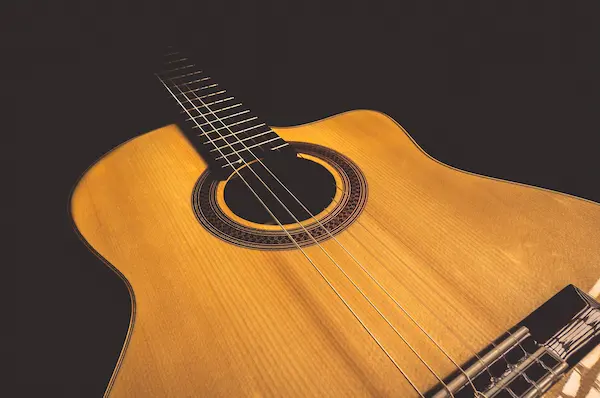
Recognizing the musical instruments of Peru is a useful beginning, but their full significance becomes clearer through performance. A photograph shows construction, while listening reveals timing, tone, interaction and the choices made by musicians.
As you explore Peru travel destinations, look for opportunities to learn that match your interests. A concert, museum visit and workshop offer different experiences; none should be assumed to provide the same access or explanation.
Start with one instrument rather than trying to understand every sound at once. Follow it through a complete section, then shift attention to another part. This makes it easier to hear how melody, accompaniment and rhythm fit together.
For example, you might follow the main melodic line first, then concentrate on the low sounds, and finally listen for the instrument that marks a repeating rhythmic figure. Repeat the process when the music changes.
A simple listening exercise can help:
Avoid deciding that every instrument has one fixed role. A player may move between accompaniment and a more prominent passage, while a small percussion instrument can strongly influence the character of the performance.
Also distinguish the sound of an instrument from the effect of amplification. A microphone, speaker system or recording mix can change what stands out. If possible, compare different performances before concluding that one instrument always sounds a particular way.
A concert lets you hear instruments in performance, but it may offer little spoken explanation. Check the program or ask whether the musicians introduce the repertoire.
A museum can provide historical context, object labels and comparisons between materials or periods. However, an instrument displayed in a case does not necessarily indicate how it sounded, who could play it or how it interacted with other performers.
A workshop may allow closer observation of technique or supervised participation. Confirm what is included, whether beginners are welcome, the language used and whether instruments are provided.
For visitors considering tours in Cusco, ask directly whether cultural performances or music-related activities form part of the proposed program. Do not assume that a general sightseeing itinerary includes a workshop or specialist musical interpretation.
Before attending an event, clarify practical details:
These questions help avoid misunderstandings. Permission to attend is not automatically permission to record, touch instruments or join a performance.
Instrument makers can explain details that are difficult to notice during a concert. Construction, tuning and the intended repertoire all affect the choices involved in producing a playable instrument.
Begin with the object in front of you. Ask which model it is, what materials were used and whether it was designed for learning, professional performance or decoration. A small souvenir and a performance instrument may look similar without serving the same purpose.
Useful questions include:
If purchasing an instrument, request care instructions and a receipt identifying the maker and materials where possible. Do not assume that claims such as “ancestral,” “authentic” or “professional” explain those details.
Materials also deserve careful consideration. If an object contains animal parts or unfamiliar natural materials, verify applicable transport and import requirements before buying. Do not rely solely on a seller’s assurance that it can be taken anywhere.
Finally, ask musicians how they prefer their work to be credited if you have permission to share a recording. Naming a performer or ensemble provides more meaningful context than labeling every clip simply “traditional Peruvian music.”

The musical instruments of Peru reveal different ways of creating, organizing and giving meaning to sound. A quena, cajita and manguaré do not share one history or purpose, and their differences are precisely what make them worth understanding. Learning their names becomes more valuable when accompanied by attention to the people and practices connected with them.
During a journey, begin with what you can hear and observe, then ask specific questions. Listen to a complete piece, read the information provided and let musicians or community hosts explain the context. These small choices turn an unfamiliar sound into a more informed cultural encounter, while recognizing that Peru’s musical heritage continues through the work of living performers, teachers and makers.
Leave a comment