Chat with our team
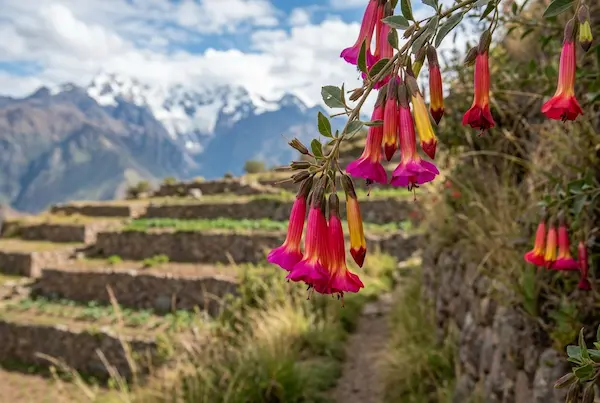
The national Peruvian flower is commonly identified as the cantuta (Cantua buxifolia), an Andean shrub with long, tubular flowers that hang from its branches. Its cultural significance explains why it is widely known as the national flower of Peru.
The cantuta is easiest to recognize when it is in bloom. Depending on the plant, its flowers may be pink, red, yellow, white, or a combination of colors. The long, downward-facing blooms are a more useful clue than any one shade. They also explain why someone who has seen only a photograph of a red cantuta might walk past a pale-flowered plant without realizing it is the same species.
For travelers, the cantuta offers a way to connect three parts of a visit to Peru, the history you hear at archaeological sites, and the places where native plants are grown today. You do not need a dedicated botanical excursion to appreciate that connection. It helps to know what the flower looks like, where to ask about it, and how to tell the difference between seeing a plant in a garden and finding it growing wild.
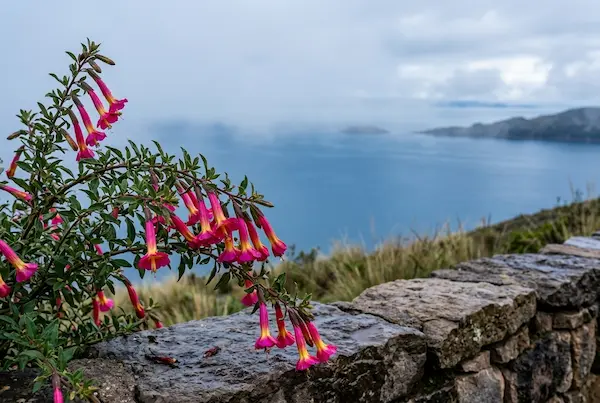
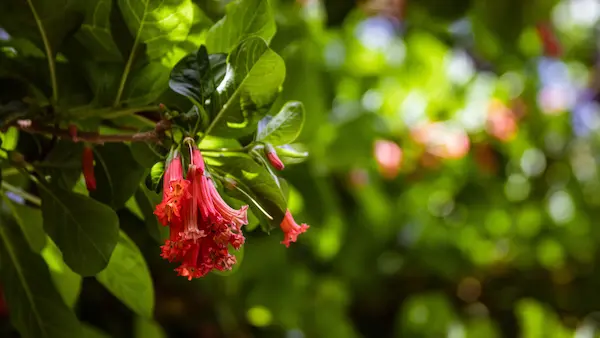
The national Peruvian flower is often photographed close up, with a single blossom filling the frame. That makes the flower’s shape easy to see, but it leaves out clues you can use in person. The cantuta grows as a shrub with woody branches. When flowers are present, they hang outward or downward, often making the blooms easiest to see from the side.
Before trying to identify one, take a moment to look at the whole plant. A cluster of bright flowers might catch your attention first, but the shape of each blossom, the way it hangs, and its position on the branch give you more to work with.
A cantuta flower has a narrow tube that widens toward the opening, giving it a trumpet-like profile. Seen from the side, the length of the tube and the flare at its end are easy to distinguish. Seen from below, the open end is more prominent. Those two views show why pictures of the same species can look quite different: one emphasizes the length of the bloom, while the other shows the opening and the colors around it.
The shrub itself provides useful context. Its woody stems distinguish it from a small herb growing close to the ground, and the flowers hang from branches instead of standing upright above a bed of foliage. Where several shrubs grow together, trace a flower back to the branch it hangs from before using nearby leaves to identify it. In planted gardens, branches from different species can overlap and make it look as though the flower belongs to the wrong plant.
If you want a photograph that will help you check the identification later, start with a wider shot of the shrub. Next, photograph a flowering branch and take a close-up from the side. If the garden has a sign, take a separate picture of the label. Those images will give you more information than a single close-up, especially if you later ask a guide or gardener to confirm what you saw.
A photograph taken when the shrub is out of bloom may be harder to identify. In that case, a garden label or someone familiar with the planting is a better starting point than trying to match the leaves to a picture. This is also why two people can visit the same garden and come away with different impressions: one sees a flowering shrub, while the other sees only leaves and branches.
Some blooms show more than one color, with the tube and the flared opening appearing in different shades. The color combination is worth noticing once you have looked at the shape of the bloom. By itself, however, a familiar shade tells you little, since other Andean plants can also have red or pink tubular flowers.
Lighting can make the difference between shades harder to judge. A flower in full sun may look brighter or paler in a photo, while a bloom under deep shade may look more saturated. If you want to compare photographs, look first at the profile and position of the flowers. Then compare the tube and the opening separately. That is more useful than trying to decide whether a photograph shows the exact pink or red you expected.
| What to look for | What you may notice | How it helps |
| Growth form | A woody shrub | Puts the flowers in the context of the whole plant |
| Flower shape | A long tube that flares at the opening | Gives you a clue that is useful across different colors |
| Flower position | Blooms hanging from branches | Makes a side view useful for identification |
| Color | Pink, red, yellow, white, or a combination | Helps describe a particular bloom |
| Plant label | Cantua buxifolia | Helps confirm the identity of a cultivated specimen |
When a plant matches several of these features, you have a stronger reason to think you are looking at a cantuta. A label or a knowledgeable local guide can help confirm it. If you plan to publish a photograph, that extra check is worth doing. An accurate caption can name the species and describe the setting, such as a courtyard garden, without implying that the plant was growing wild.
The national Peruvian flower is known for its association with the Inca period as much as for its appearance. Peru’s Ministry of the Environment refers to the cantuta as the sacred flower of the Incas and explains that its symbolic value helped make it an emblem of Peruvian identity. That history gives the flower a place in conversations about cultural heritage as well as native plants.
The wording matters when you explain this connection. “Widely known as the national flower of Peru” reflects the popular name and the way the plant is presented in public information. “Officially declared by law” is a different claim and needs a specific legal source. For a travel article, the familiar name and the flower’s documented cultural significance are enough to explain why people associate it with Peru.
The cantuta was regarded as sacred during the Inca period, which is why it is often called the sacred flower of the Incas. The Ministry of the Environment also describes it as a symbol associated with Inca achievements. The plant’s importance therefore goes beyond its appearance: it belongs to the history of how people in the Andes gave meaning to the natural world around them.
You may hear more detailed accounts during a museum visit, at an archaeological site, or in conversation with a guide. If someone shares a story about the flower, it can help to ask whether it comes from local oral tradition, a historical account, or a modern interpretation. Those answers offer different kinds of insight. A story can be meaningful to the people who tell it even when its details cannot be established as historical fact.
For example, the general statement that the cantuta held sacred significance is a useful introduction. A claim that it was used in a specific ceremony, at a particular site, or on a fixed date needs more context. Keeping that distinction in mind makes a guided visit more interesting: instead of collecting one explanation and repeating it as universal, you can notice which details are shared across accounts and which belong to a particular place.
Travelers considering Inca Trail treks can use that curiosity to ask about plants alongside archaeology. A question such as “Which native plants did people here know or use?” often leads to a more informative conversation than asking whether one flower will appear along the route. A guide may be able to explain the vegetation visible on the day and put the cantuta’s broader cultural significance in context. A trek, however, does not guarantee a flowering specimen.
Today, the cantuta is a recognizable symbol of Andean flora and Peruvian cultural identity. Its visibility comes partly from the distinct shape of the flower, which is easy to pick out in a photograph or illustration, and partly from the association with Inca history. Those qualities make it a useful starting point for talking about native plants with people who may know the name but have never seen the shrub.
A cultivated cantuta can also open a conversation about how plants are valued locally. If you see one in a courtyard, for example, ask whether it was chosen for its flowers, its cultural associations, or because it grows well in that particular setting. A gardener may give a practical answer, while a guide may focus on the historical symbolism. Hearing both can give you a fuller picture of the plant’s place in everyday life.
That distinction is useful when writing or taking photographs about Peru. A cantuta in a town garden can illustrate how an Andean plant is grown and appreciated today. It does not demonstrate where the species occurs naturally, and it cannot tell you how a nearby archaeological site used the plant centuries ago. A precise caption keeps the observation tied to what you actually saw while leaving room to explain the wider history in the article.
The flower also gives travelers a more specific way to notice vegetation. When you know its name and shape, a planted courtyard is no longer just a patch of color between stops. You can look for the hanging tubes, compare the shrub with the plants around it, and ask what else in the garden is native to the region. The cantuta becomes an entry point into a much larger subject without having to stand for all of Peru’s plant life.
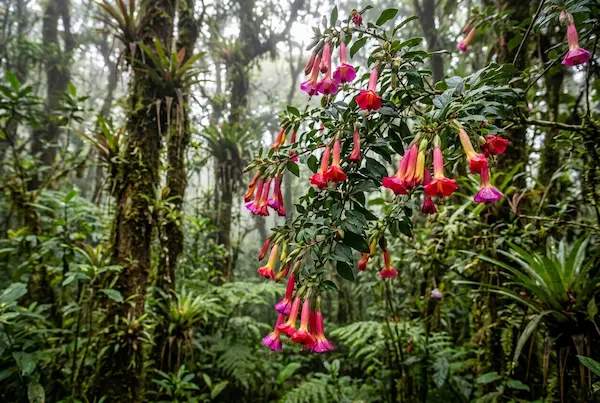
The national Peruvian flower is an Andean plant, so the highlands provide the geographic context for understanding it. During a trip, however, you may encounter a cultivated cantuta in a garden rather than a wild shrub. Both are worthwhile observations. What changes is what you can say about the plant: one shows how people grow it, while the other, if confirmed, tells you something about the habitat where it occurs naturally.
If seeing the flower is one of your priorities, look for an identified specimen and ask whether it is currently in bloom. A destination’s association with the Andes is a good reason to learn about the local flora, but it is too broad to predict whether a particular path or garden will have flowering cantutas. Asking someone who knows the site can save you a detour and give you a more reliable answer than a general description of the region.
The cantuta is native to the Andes. It is helpful to distinguish those settings because a planted shrub may grow in a courtyard, on a property boundary, or in a managed garden. Its presence there reflects a decision to cultivate it and does not establish that the surrounding land supports wild populations.
Likewise, “the Andes” describes a mountain system with very different environments. Dry slopes, irrigated valleys, exposed ridges, and sheltered gardens can all be part of a highland itinerary. The plant life changes across those settings. That is why an itinerary description that mentions mountain scenery or native flora should not be read as a species list.
The Peru travel destinations guide is a useful starting point if you are comparing highland regions for a trip. Once you have chosen where to go, narrow your questions to the places you will actually visit. Ask whether a public garden or cultural site has labeled native plants, whether a local guide covers vegetation, and whether there is time to stop and look closely. Those details are more useful than assuming the flower will be visible anywhere in the highlands.
If you are documenting what you find, record the setting before making a claim about distribution. A note such as “photographed in a planted courtyard” or “identified by a garden label” is clear and useful. You can still share what you observed without turning it into a claim about where the species grows wild.
The best time to look is when plants at the specific site are flowering. A single national calendar is less useful for travel planning than a recent observation from the garden or route you will visit. Conditions differ between highland locations, and plants grown in managed gardens may be cared for differently from shrubs growing without irrigation or regular maintenance.
If the flower is a priority, ask a focused question before the visit: “Do you have cantuta plants, and are any flowering now?” That separates two things that are easy to confuse. A garden may grow the species and still have no open blooms on the day you arrive. If a guide or gardener confirms that a plant is flowering, ask whether it can be seen from an area open to visitors.
The time of day can also affect how well you see and photograph the flower. In softer light, it is often easier to record the shape and color of a bloom without bright highlights or deep shadows. If you arrive in strong sun, step to one side and look for a flower already in shade. You can usually get a clearer angle by moving yourself instead of touching or repositioning the branch.
If no plants are flowering, a labeled shrub can still be useful. Notice its size, the way the branches grow, and whether it is planted alone or among other species. Ask what the flowers look like at that site and whether the gardener has a photograph from an earlier visit. You will have a better reference for recognizing the cantuta the next time you encounter a flowering plant.
The easiest way to enjoy the cantuta is to keep it in place and take your time looking at it. In a managed garden, ask before stepping off a path or into a planting bed. In a natural setting, give the shrub and the ground around it space, especially if several people want the same photograph.
A few simple habits make it easier to document the flower and leave the site as you found it:
If you are choosing among trekking routes to Machu Picchu, compare the terrain and the time available for stops. A route that allows you to pause with your guide can give you more opportunities to ask about the plants you actually encounter.
A cantuta sighting can be as simple as noticing a row of hanging blooms in a courtyard you were already going to visit. Take a closer look at the shape, ask how the plant came to be there, and keep the distinction between what you observed and what you heard about its history. Those few minutes can tell you something specific about the flower and the place where you found it.
Leave a comment