Chat to a Andean Road Peru
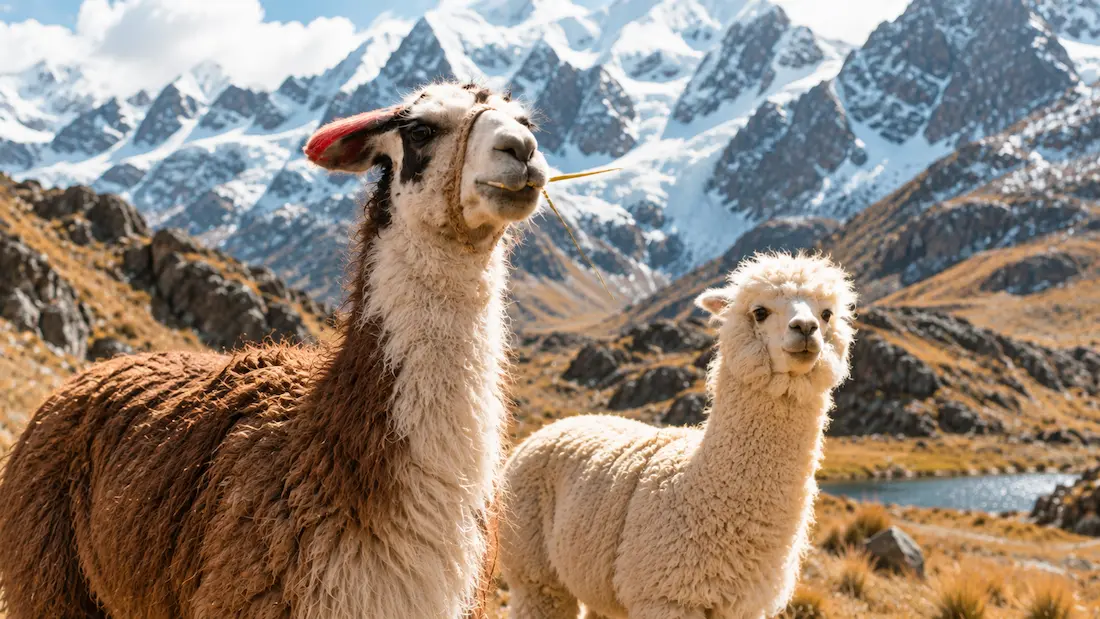
The alpaca and llama are two of the most representative South American camelids of the Andes. Although they may look similar at first glance, there are important differences in their size, appearance, fiber, behavior, and traditional uses. Looking at these characteristics makes it easier to identify each species and understand the role they have played in Andean communities.
Understanding the differences between alpaca and llama helps explain why these two animals do not serve exactly the same purposes. The llama stands out for its larger size, strength, and traditional use as a pack animal, while the alpaca is especially valued for the quality of its fiber. Alongside these two species, there are also two other South American camelids: the guanaco and the vicuña.
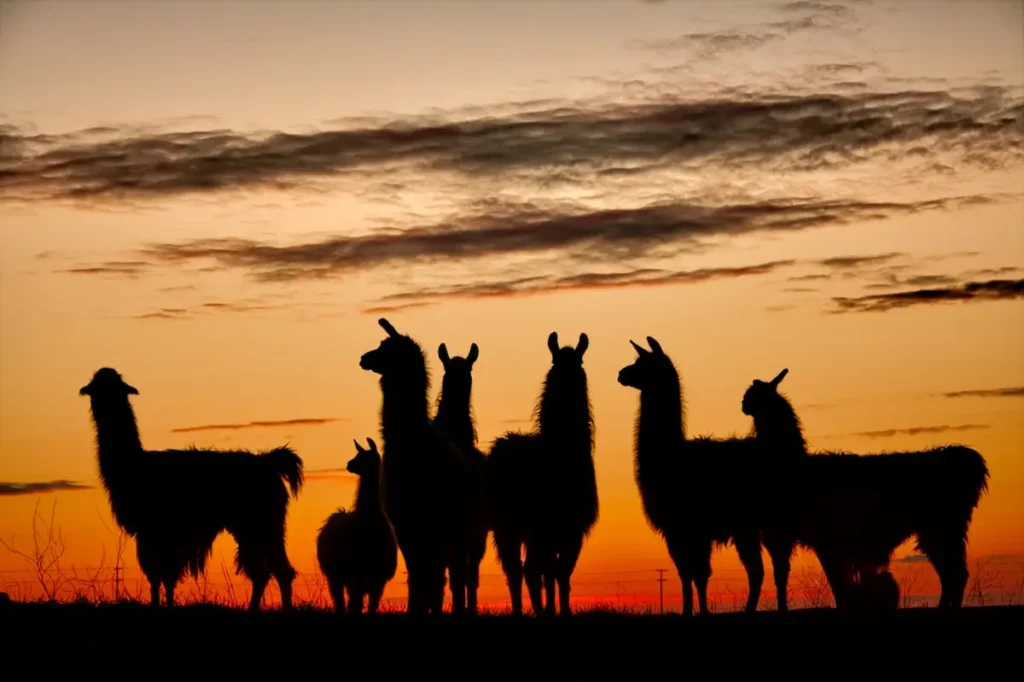
Although the alpaca and llama belong to the same camelid family and share several characteristics, they can be distinguished by various physical and functional traits. The llama generally has a larger, more robust body, while the alpaca has a smaller, more compact appearance and a heavier coat. These characteristics can help identify them even when both animals are found in similar environments.
The differences between alpaca and llama are not limited to their appearance. Their head shape, ear size, fiber characteristics, and traditional uses also provide useful clues when identifying each species. Looking at several characteristics together makes it easier to determine which animal you are seeing rather than relying on just one physical feature.
Although they can share similar coat colors and live in comparable environments, five main characteristics make it easier to tell them apart. Size, head shape, fiber, behavior, and traditional uses provide useful references when comparing the two species. Looking at these aspects together gives a clearer picture than relying on a single characteristic.
One of the easiest differences between alpaca and llama to observe is their size. The llama has a larger and more robust body, with longer legs and a body that generally appears more elongated. These proportions give it a taller and stronger appearance, particularly when compared directly with an adult alpaca.
The alpaca, by contrast, has a smaller and more compact build. Its abundant fiber can make it appear larger than it actually is, especially when its coat is fully grown. When the two species are standing together, their difference in size is often one of the first characteristics that helps distinguish them.
Head shape and ear size are also useful when identifying differences between alpaca and llama. The llama generally has a longer face and large, elongated ears that curve slightly inward. These features give the animal a distinctive appearance that can be noticed easily when viewing it from the front or side.
The alpaca has a smaller, more rounded head compared with the llama. Its ears are shorter and tend to have a straighter appearance. While individual animals can vary, looking at the head and ears together provides another useful way to distinguish the two species and complement the comparison of their size and body shape.
Fiber is another characteristic that helps explain the differences between alpaca and llama. Alpaca fiber is especially known for being fine, soft, and abundant, and it can naturally occur in a range of colors. These characteristics have made alpaca fiber particularly valuable for clothing, textiles, and other products.
Llamas also produce fiber, but its characteristics can vary considerably and may include a higher proportion of coarser fibers. Their coats can differ from one individual to another and are not always as dense as an alpaca's. Although both species produce useful fiber, there are important differences in its characteristics and traditional applications.
The alpaca and llama are social animals that can live in groups and are adapted to the conditions of the Andes. However, their behavior can vary depending on the individual, environment, and way the animal has been raised or handled. For this reason, temperament should not be used as the only way to identify one species from the other.
Their traditional roles are also connected to their characteristics. Llamas have historically been used for activities that require strength and movement across mountainous terrain, while alpacas have primarily been raised for their fiber. These differences in purpose have influenced how people have managed and raised each species over time.
Llamas have historically played an important role as pack animals because of their size, strength, and ability to move across mountainous terrain. Their fiber and other products are also used, meaning that llama raising can serve several purposes within Andean communities. This versatility explains the importance llamas have maintained in traditional activities.
Alpacas, on the other hand, are primarily raised for their fiber. Its softness, fineness, and natural range of colors have made alpaca fiber important in textile production. This activity also has an economic and cultural connection with many highland communities, where alpaca raising continues to be part of traditional productive activities.
| Difference | Alpaca | Llama |
|---|---|---|
| Size and weight | Smaller and more compact | Larger and more robust |
| Head and ears | Shorter face and smaller ears | Longer face and larger ears |
| Fiber | Finer, softer, and more abundant | More variable and resistant |
| Behavior | Mainly associated with herd raising and fiber production | Traditionally associated with carrying and movement |
| Uses | Mainly fiber production | Carrying, fiber, and other products |
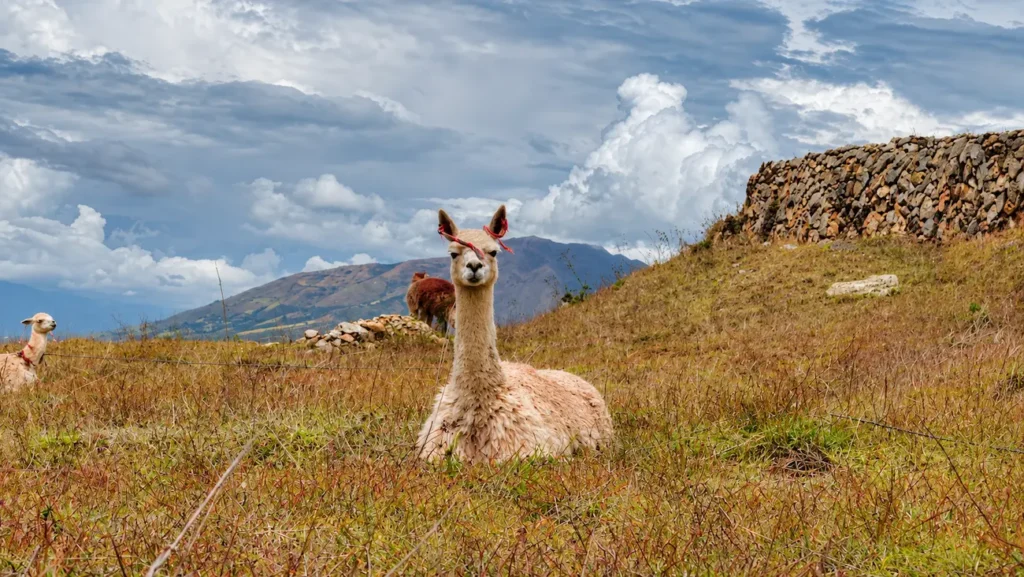
The alpaca and llama are closely associated with Andean ecosystems and are adapted to high elevations, changing temperatures, and mountainous terrain. Their presence is part of traditional livestock activities in different communities, particularly in highland areas where these animals have been raised for generations. They remain closely connected to the landscapes and traditions of the Andes.
In Peru, both species have an important presence and are connected to economic, cultural, and productive activities. Their presence is also part of the experience of travelers who want to see Andean landscapes and learn more about the region's traditions and wildlife.
Alpacas are especially associated with highland areas where environmental conditions support their raising. In Peru, they have an important presence, particularly in high-altitude regions where they form part of traditional livestock systems. Their adaptation allows them to live in environments with low temperatures and the conditions typical of mountainous areas.
Their thick coat also helps protect them from cold temperatures. Alpaca raising is closely linked to fiber production, an activity that continues to have economic and cultural importance for many communities. This connection between communities, animals, and landscapes is also part of the identity of the Andes.
Llamas can be found in different areas of the Andes and have a strong ability to adapt to high-altitude environments. Their strength and body structure allow them to move across rugged terrain, a characteristic that historically contributed to their use as pack animals. This adaptability has also allowed them to become part of different livestock systems throughout the Andean regions.
Their raising takes place in various highland environments and is connected to the activities of rural communities. In addition to their role as pack animals, llamas can also be raised for their fiber and other products. Their presence in these areas is therefore connected to both traditional practices and different productive activities.
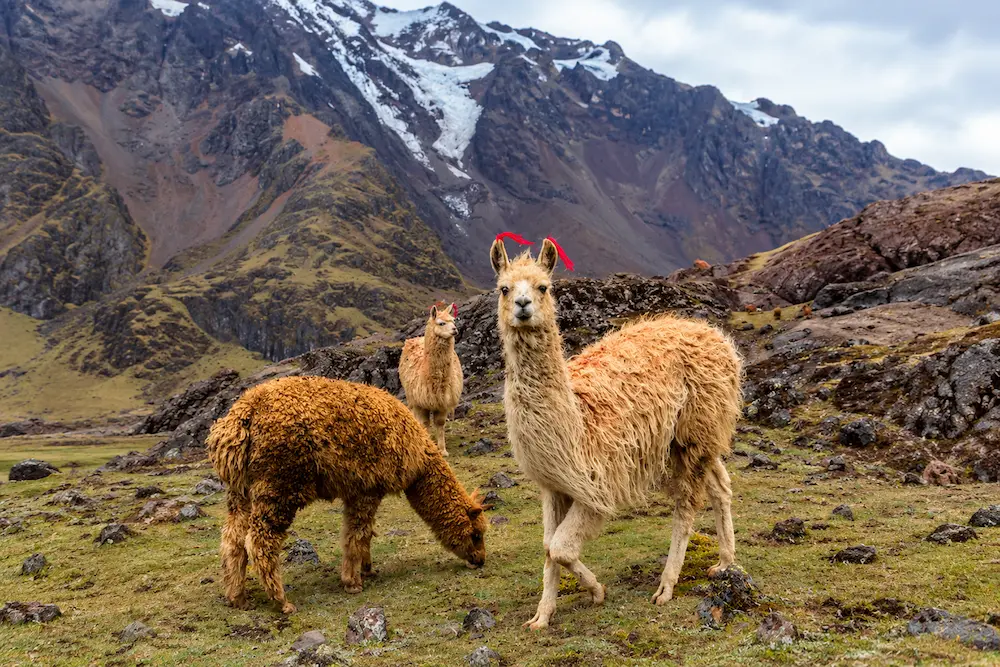
Although both species can be raised in similar environments, their main historical and productive roles are not exactly the same. Their physical characteristics have influenced the uses developed by Andean communities over time, from transportation and carrying loads to fiber production. These different roles also help explain why each species has a particular place within Andean traditions.
Llamas are known for their strength and ability to carry loads, while alpacas have an especially important role in fiber production. These differences explain why both species continue to have a place in traditional and economic activities throughout the Andes. Despite sharing habitats and certain characteristics, their main uses respond to different needs.
Llamas have traditionally been used as pack animals, particularly in areas where mountainous terrain makes transportation difficult. Their strength and ability to travel across different distances made them an important resource for Andean communities. This role has been one of the main reasons why llama raising became important in different areas of the region.
Their fiber can also be used to make various textile products, and their raising may also be associated with the use of their meat. For this reason, llamas have a broad productive role that is not limited to a single activity. Their different uses explain why they continue to be part of the life and traditions of various Andean communities.
The main importance of alpacas is closely related to their fiber. Their coats can provide fine and soft fibers used to produce clothing, textiles, and other products. Their natural range of colors and fiber characteristics have made them particularly valued in textile production and help distinguish them from other camelids.
Alpaca fiber production is also part of the economy of many highland communities. Raising alpacas allows traditional knowledge passed down through generations to remain connected with an activity that has a presence in both national and international markets. In this way, alpacas maintain a close relationship with the culture and productive activities of the Andes.
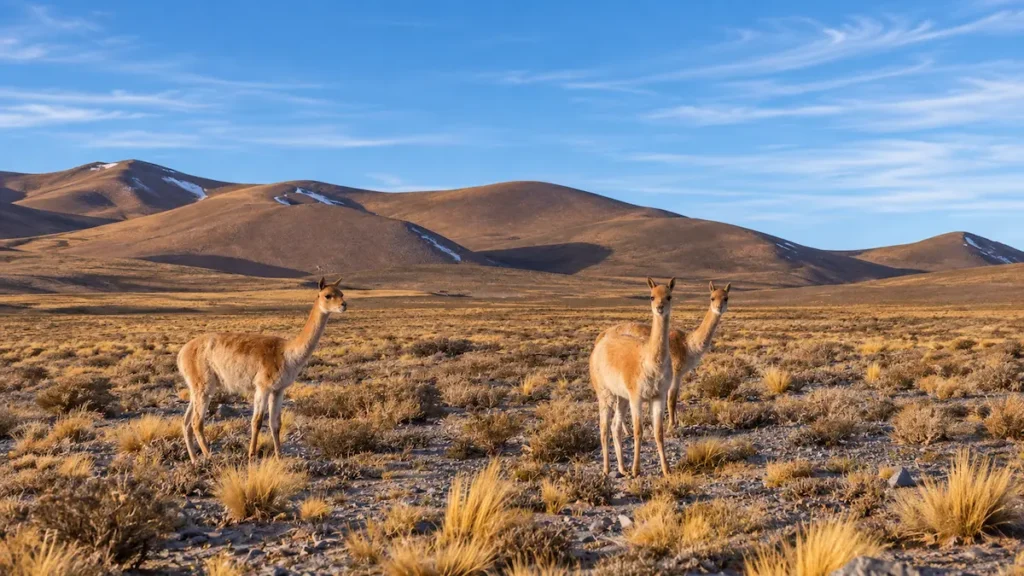
Alpacas and llamas are not the only South American camelids. Guanacos and vicuñas are also part of this group and, unlike the first two species, they are wild animals. All four share characteristics typical of camelids, but they have important differences in size, appearance, habitat, and fiber that make it possible to distinguish them.
Learning about these four species provides a broader view of the camelid diversity found in Andean ecosystems. For travelers exploring the region, seeing these animals can also be part of experiencing its landscapes and communities.
The guanaco is a wild South American camelid that is larger than the vicuña and has an appearance that can resemble a llama. It has a slender body, long legs, and a coat that is generally brown or reddish, with lighter areas around the chest and other parts of the body. Its more streamlined appearance can help distinguish it from the llama, although the two species share some physical characteristics.
Guanacos are mainly found in arid and semi-arid areas of South America and have a strong ability to adapt to different environments. Unlike alpacas and llamas, they are wild animals and are not generally part of traditional domestic livestock systems. Their presence across different South American ecosystems also makes them an important part of the region's native wildlife and demonstrates another form of adaptation among camelids.
The vicuña is the smallest of the four South American camelids and is characterized by its slender body, long neck, and delicate appearance. Its coat generally has light brown and white tones, while its lightweight body is adapted for movement through high-altitude environments. These characteristics help distinguish it from the alpaca and llama, particularly because of its smaller size and more delicate build.
Vicuñas mainly inhabit high-altitude areas and are part of the wild fauna of countries such as Peru, Bolivia, Chile, and Argentina. Their adaptation to high elevations and the characteristics of their fiber make them especially representative of Andean ecosystems. Vicuña fiber is exceptionally fine and highly valued, so its use is subject to conservation and management measures.
Although they can look similar when observed quickly, several characteristics can be used to distinguish each species. Alpacas and llamas are domesticated species, while guanacos and vicuñas are wild. Size, body shape, and fiber characteristics also provide useful clues and help explain the particular features of each animal.
| Characteristic | Alpaca | Llama | Guanaco | Vicuña |
|---|---|---|---|---|
| Status | Domesticated | Domesticated | Wild | Wild |
| Size | Medium | Large | Large and slender | Small |
| Body | Compact | Robust | Slender | Delicate |
| Face | Shorter and rounded | Elongated | Elongated | Small and slender |
| Fiber | Fine and abundant | Variable and resistant | Fine | Very fine |
| Relationship with people | Mainly fiber production | Carrying, fiber, and other uses | Wild fauna | Wild fauna and regulated fiber use |
Although both are social and domesticated animals, their behavior can vary depending on their upbringing, environment, and how they have been handled. Not every individual reacts in the same way, so temperament should not be treated as the only way to identify a species. Observing several physical characteristics provides a more reliable reference.
The traditional role of each species has also influenced their relationship with people. Llamas have been used for transportation and carrying loads, while alpacas have primarily been raised for fiber production. In both cases, appropriate care and respectful handling are important for their well-being and for maintaining suitable conditions within the herd.
Llamas tend to be active animals and can move easily across rugged terrain. Their historical relationship with people is connected, among other activities, to carrying loads, so they have been handled for generations for this purpose. Their ability to adapt to different types of terrain has also supported their presence in various areas of the Andes.
They are also social animals that can live in groups and establish relationships within the herd. As with any species, individual behavior can vary depending on factors such as age, handling, and environment. General characteristics of the species therefore do not determine exactly how every animal will behave.
Alpacas generally live in groups and display the social behavior typical of herd animals. Their raising is particularly associated with fiber production, so daily management often focuses on their well-being and the proper care of their coat. The conditions in which they are raised can also influence how individual animals respond to their surroundings.
Their behavior can vary depending on their living conditions and interaction with people. Although there are general characteristics that describe the species, each animal may respond differently to unfamiliar situations or changes in its environment. Observing their behavior within the herd can help provide a better understanding of these individual differences.
To recognize the main differences between alpaca and llama, it is not necessary to focus on just one feature. Looking at several characteristics at the same time makes it easier to distinguish each species, especially when both have similar coat colors. Size, face shape, ears, fiber, and body structure provide simple references for making this comparison.
These are some of the main features to look at:
Understanding the differences between alpaca and llama makes it easier to see that, although both species are part of Andean identity and share several characteristics, they have distinct traits. Their size, head shape, ears, fiber, behavior, and traditional uses are some of the features that help distinguish them. Looking at these characteristics also provides a better understanding of the relationship each species has with Andean communities.
Together with the guanaco and vicuña, alpacas and llamas form part of the diversity of South American camelids associated with the Andes. Understanding their characteristics helps highlight the role each species plays in ecosystems, communities, and productive activities across the region. This diversity also reflects the long-standing relationship between camelids, Andean landscapes, and the communities that have raised and cared for them over generations.
Leave a comment