Av Retamayoc L-10, San Sebastián 08002
- +51 940 809 144
- Travel Blog
- About Us
- Contact Us
Secure your spot on the Inca Trail 2026. Journey beyond the ordinary Secure your spot today
Av Retamayoc L-10, San Sebastián 08002
Chat to a Andean Road Peru
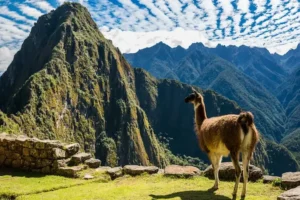
The flora and fauna of the Andes Mountains represent one of the richest and most diverse ecosystems in the world. Stretching across South America, the Andes create a wide range of climates and habitats, from cloud forests and valleys to high-altitude grasslands and snow-covered peaks.
These unique environments are home to remarkable wildlife such as the Andean condor, llamas, alpacas, and the spectacled bear, along with a wide variety of native plants adapted to extreme mountain conditions. Together, the flora and fauna of the Andes reveal the incredible biodiversity and natural beauty of this iconic mountain range.
The flora and fauna of the Andes are unique because they evolved in one of the most diverse mountain ecosystems in the world. The Andes stretch across South America and create a wide range of climates and habitats. These range from tropical cloud forests and fertile valleys to high-altitude grasslands and snowy peaks. Such environmental differences allow a remarkable variety of plants and animals to thrive, even in areas where conditions change dramatically with altitude.
Another key factor is the high number of endemic species in the region. Many plants and animals have adapted to harsh conditions, including strong winds, cold temperatures, and low oxygen levels. As a result, the Andes host distinctive wildlife and vegetation that cannot be found anywhere else. This makes the mountain range one of the most important centers of biodiversity in the world.
You may also like: Peru in April: complete travel guide
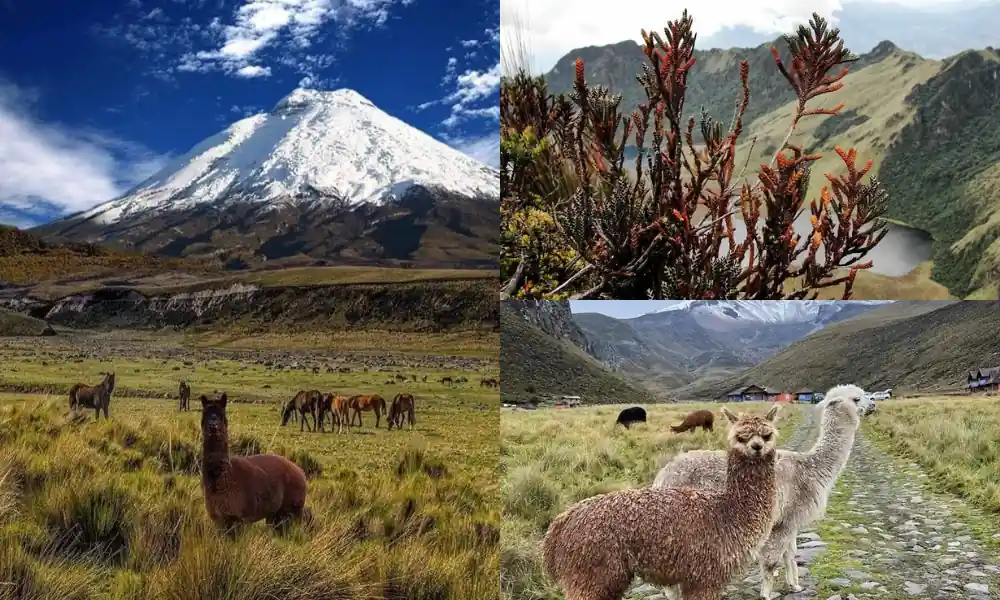
The Andes Mountains contain a remarkable diversity of ecosystems shaped mainly by altitude, climate, and geography. As you move from the lower slopes to the highest peaks, the environment changes significantly, creating habitats that support a wide variety of plants and animals. These ecosystems play a crucial role in sustaining the rich flora and fauna of the Andes.
Located at the lower elevations on the eastern slopes of the Andes, tropical rainforests are warm, humid, and extremely biodiverse. These forests are closely connected to the Amazon Basin and contain dense vegetation, towering trees, vines, and countless plant species. The ecosystem supports a huge variety of wildlife, including monkeys, colorful birds, reptiles, amphibians, and insects, making it one of the richest biodiversity zones linked to the Andean region.
Cloud forests are found at mid-elevations, usually between 1,500 and 3,000 meters above sea level. These forests are constantly covered by mist and low clouds, which create a cool and very humid environment. The moisture allows mosses, ferns, orchids, and epiphytes to grow abundantly on trees and rocks. Cloud forests are also important habitats for many birds, including hummingbirds and toucans, as well as rare mammals and amphibians.
The puna is a high-altitude grassland ecosystem typical of the central Andes, especially in Peru and Bolivia. It is characterized by cold temperatures, intense sunlight during the day, and strong winds. Vegetation mainly consists of hardy grasses, shrubs, and cushion plants that can survive the harsh conditions. This ecosystem is home to animals such as llamas, alpacas, vicuñas, Andean foxes, and several species of birds adapted to life at high altitudes.
The páramo ecosystem is mainly found in the northern Andes, particularly in Colombia, Ecuador, and northern Peru. It consists of high-altitude grasslands, wetlands, and unique plant communities that are adapted to cold and humid conditions. One of its most distinctive plants is the frailejón, which helps retain moisture and regulate water flow. The páramo also plays a critical role in providing fresh water for nearby cities and communities.
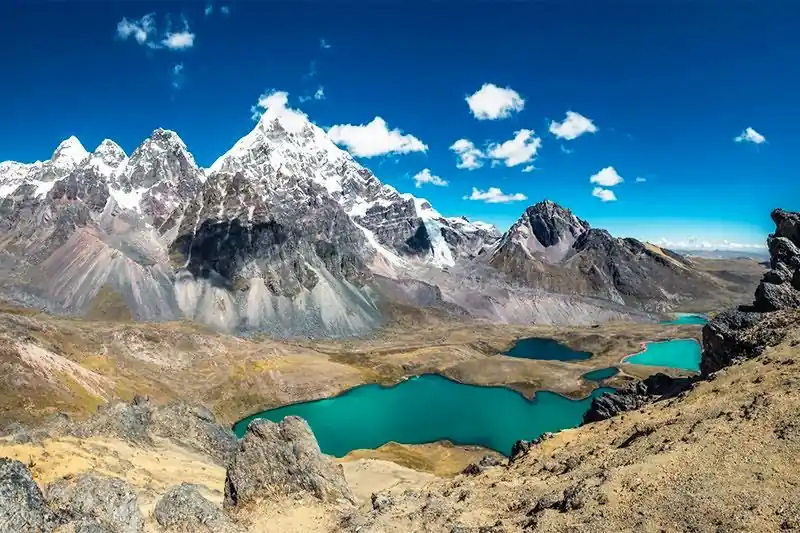
At the highest elevations of the Andes, the environment becomes extremely harsh due to freezing temperatures, strong winds, and low oxygen levels. Vegetation becomes very limited, with only a few specialized plants capable of surviving among rocks and icy soils. These areas are dominated by glaciers, snowfields, and rocky peaks, yet they still provide habitat for resilient species such as the Andean condor and small mammals adapted to the cold mountain climate.
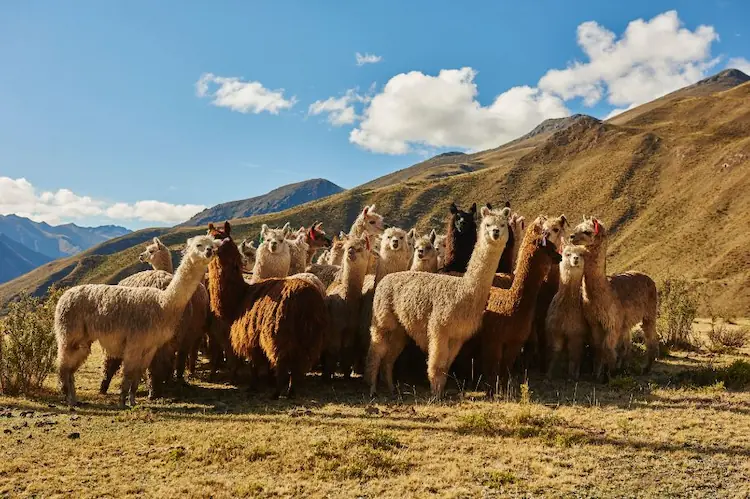
The Andes Mountains are home to a remarkable variety of native animals that have adapted to life in high-altitude environments. Cold temperatures, strong winds, and lower oxygen levels make survival challenging, but many species have evolved unique characteristics that allow them to thrive in these conditions. From large mammals to impressive birds, the wildlife of the Andes plays an important role in maintaining the balance of these mountain ecosystems.
Llamas are one of the most recognizable animals of the Andes and have been domesticated by Andean communities for thousands of years. They are mainly used as pack animals to transport goods across mountainous terrain. Their thick wool helps them survive the cold climate, and their strong legs allow them to move easily through steep landscapes.
Alpacas are closely related to llamas but are smaller and mainly valued for their soft and warm wool. People highly value alpaca fiber around the world for making textiles and clothing. Alpacas thrive in high-altitude environments and often graze in the grasslands of the Andes.
Wild camelids inhabit the high Andean plains. They produce one of the finest and most valuable natural fibers in the world, prized for its softness and warmth. These animals roam freely in protected areas, where conservation efforts help maintain their populations. Unlike llamas and alpacas, people do not domesticate vicuñas, and conservation programs protect their populations in designated areas.
The spectacled bear is the only bear species native to South America and is mainly found in Andean forests and mountainous regions. It gets its name from the light-colored markings around its eyes that resemble glasses. This shy and solitary animal plays an important role in the ecosystem by helping disperse seeds and maintain forest health.
The Andean condor is one of the largest flying birds in the world and a powerful symbol of the Andes. With its enormous wingspan, it can soar for hours using mountain air currents. The condor is an important scavenger, helping maintain the natural balance by feeding on carrion across the Andean landscape.
Also known as the culpeo, the Andean fox is a clever and adaptable predator found in many Andean habitats. It feeds on small mammals, birds, insects, and fruits. Its ability to adapt to different environments allows it to survive in both high mountain areas and lower valleys.
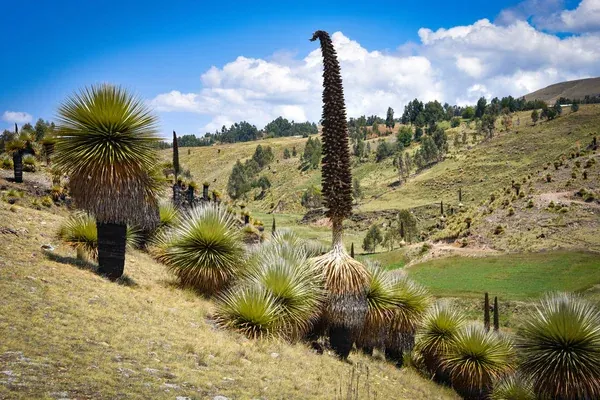
The flora and fauna of the Andes include a wide variety of plant species that have adapted to the region’s diverse climates and high-altitude conditions. From humid cloud forests to cold mountain grasslands, Andean plants have developed special characteristics that help them survive strong winds, intense sunlight, and low temperatures. These plants also play an essential role in supporting the ecosystems where many animals of the Andes live.
Polylepis trees rank among the highest-growing trees in the world and thrive in high Andean forests. Their distinctive bark, made of thin layers, helps protect them from cold temperatures and harsh mountain conditions. These forests provide important habitats for many birds and small animals.
Ichu grass is a resilient plant that dominates many high-altitude grasslands in the Andes. It can survive extreme weather conditions such as frost, drought, and strong winds. This grass is also a vital food source for animals like llamas, alpacas, and vicuñas.
Puya raimondii, often called the “Queen of the Andes,” is one of the most impressive plants in the region. It can grow several meters tall and produces a massive flowering spike containing thousands of flowers. This unique plant is native to the high Andes of Peru and Bolivia.
Orchids rank among the most diverse plants in Andean ecosystems, especially in cloud forests. These flowers come in many shapes and colors and often grow attached to trees as epiphytes. Experts consider the Andes one of the most important regions in the world for orchid diversity.
Quinoa is a traditional crop cultivated in the Andes for thousands of years. It grows well in poor soils and high-altitude environments, making it perfectly suited to the mountainous conditions of the region. Today, people around the world recognize quinoa for its nutritional value.
You may also like: Inca language and writing: how the Incas communicated
Animals living in the Andes Mountains have developed remarkable adaptations that help them survive in high-altitude environments. Conditions in this region can be extreme, with low oxygen levels, cold temperatures, strong winds, and intense sunlight. To cope with these challenges, many species have evolved special physical traits such as thicker fur to retain heat and efficient respiratory systems that allow them to use oxygen more effectively in thin mountain air.
Many Andean animals also have strong legs and specialized hooves that help them move across steep and rocky terrain. Birds like the Andean condor take advantage of mountain air currents to glide effortlessly across valleys and cliffs. Visitors who explore these landscapes during machu picchu tours often have the chance to observe some of these fascinating species and understand how wildlife has adapted to life in one of the most challenging mountain ecosystems in the world.
The flora and fauna of the Andes include many endemic species, meaning plants and animals that exist only in this mountain region. The Andes stretch across several countries and feature dramatic changes in altitude and climate, which have allowed unique species to evolve in isolated ecosystems over thousands of years. Because of this, scientists consider the Andes one of the most important biodiversity hotspots in South America.
Some of the most notable endemic species of the Andes include:
These plants and animals highlight the extraordinary biodiversity that characterizes the flora and fauna of the Andes, making the region a vital area for conservation and ecological research.
The flora and fauna of the Andes vary greatly depending on altitude. As elevation increases, the climate becomes colder, oxygen levels decrease, and vegetation changes significantly. These environmental differences create distinct ecological zones where plants and animals have adapted to survive under specific conditions.
At lower elevations, tropical forests and cloud forests support dense vegetation and a wide range of wildlife, including birds, insects, and mammals. In mid-altitude regions, shrubs and mountain grasslands replace forests, and animals such as llamas, alpacas, and Andean foxes live there. At the highest elevations, vegetation becomes sparse due to extreme cold and strong winds, yet some resilient plants and birds, such as the Andean condor, continue to thrive in these challenging environments.
The flora and fauna of the Andes are incredibly diverse, but many species face growing threats due to deforestation, climate change, mining activities, and expanding agriculture. These pressures can damage fragile ecosystems and reduce habitats for many native plants and animals. Because the Andes contain a high number of endemic species, protecting this region is essential for preserving global biodiversity.
Conservation efforts across the Andes focus on protecting natural habitats, creating national parks and reserves, and promoting sustainable practices that benefit both nature and local communities. Environmental organizations, researchers, and indigenous groups all play an important role in safeguarding these ecosystems. By protecting Andean biodiversity, it is possible to ensure that future generations can continue to experience the rich natural heritage of this remarkable mountain range.
You may also like: 10 Mountains in Peru with the most spectacular views
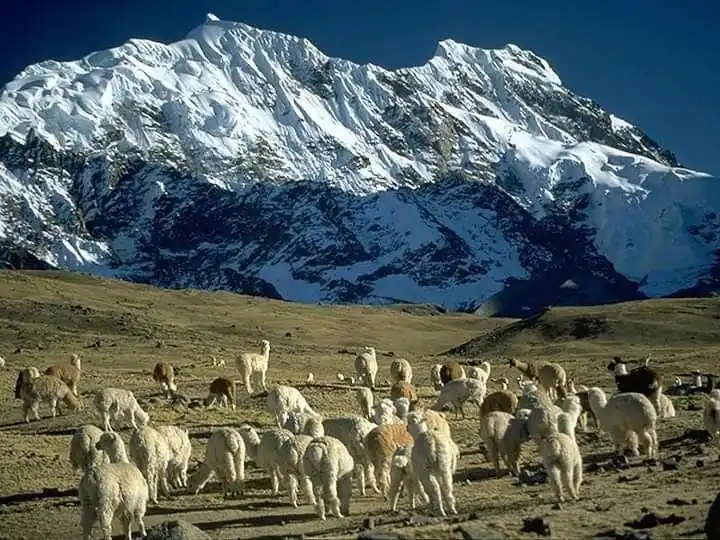
The Andes Mountains are one of the most extraordinary natural regions on the planet, home to an incredible diversity of plants and animals adapted to a wide range of climates and altitudes. From lush cloud forests to high-altitude grasslands and snowy peaks, each ecosystem supports unique species that form part of the remarkable flora and fauna of the Andes.
Understanding and protecting this biodiversity is essential for maintaining the ecological balance of the region. The Andes not only provide habitat for countless species but also support local communities and cultural traditions that have coexisted with nature for centuries. Preserving these ecosystems ensures that the natural beauty and biological richness of the Andes will continue to inspire future generations.

Hi, I'm Kevin, a Peruvian who loves Andean cultures and is proud of my country. On this blog, I share useful and reliable information so you can discover Peru's history, nature, and authentic traditions.
Leave a comment