Chat to a Andean Road Peru
Inca mythology is a rich system of beliefs that shaped the spiritual and cultural life of one of the most powerful civilizations in South America. It explains the origin of the world, nature, and humanity through stories of gods, sacred animals, and powerful natural forces. The Incas believed that everything in the universe was interconnected and guided by divine energy. Their mythology includes important deities such as Inti, the Sun God, and Pachamama, the Earth Mother. These stories were passed down through generations and continue to influence Andean traditions today, offering a deeper understanding of Inca culture and worldview.
Inca mythology is the collection of ancient beliefs, stories, and traditions that explain how the world and humanity were created according to the Inca civilization. It includes a wide range of gods, sacred beings, and natural forces that were believed to govern life in the Andes. These myths were passed down orally and played a central role in guiding daily life, religious practices, and social organization. Through these stories, the Incas understood natural events like the sun, moon, mountains, and rivers as divine expressions. Inca mythology remains an essential part of Peru’s cultural heritage and identity today.
Inca mythology is important because it helps us understand how the Inca civilization viewed the world and their place within it. These beliefs shaped their religion, agriculture, politics, and daily life, influencing how they interacted with nature and organized their society. Myths about gods like Inti and Pachamama guided rituals and traditions that ensured harmony between humans and the environment. Today, Inca mythology also preserves cultural identity and connects modern Andean communities with their ancestral roots. Studying these stories provides valuable insight into one of the most advanced and spiritually rich civilizations in ancient history.
You my also like: Corpus Christi in Cusco 2026: everything you need to know
The Inca worldview was deeply connected to nature, and their gods represented essential forces that sustained life in the Andes. Each deity had a specific function within religion, agriculture, and social order.
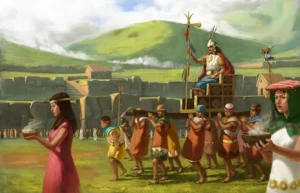
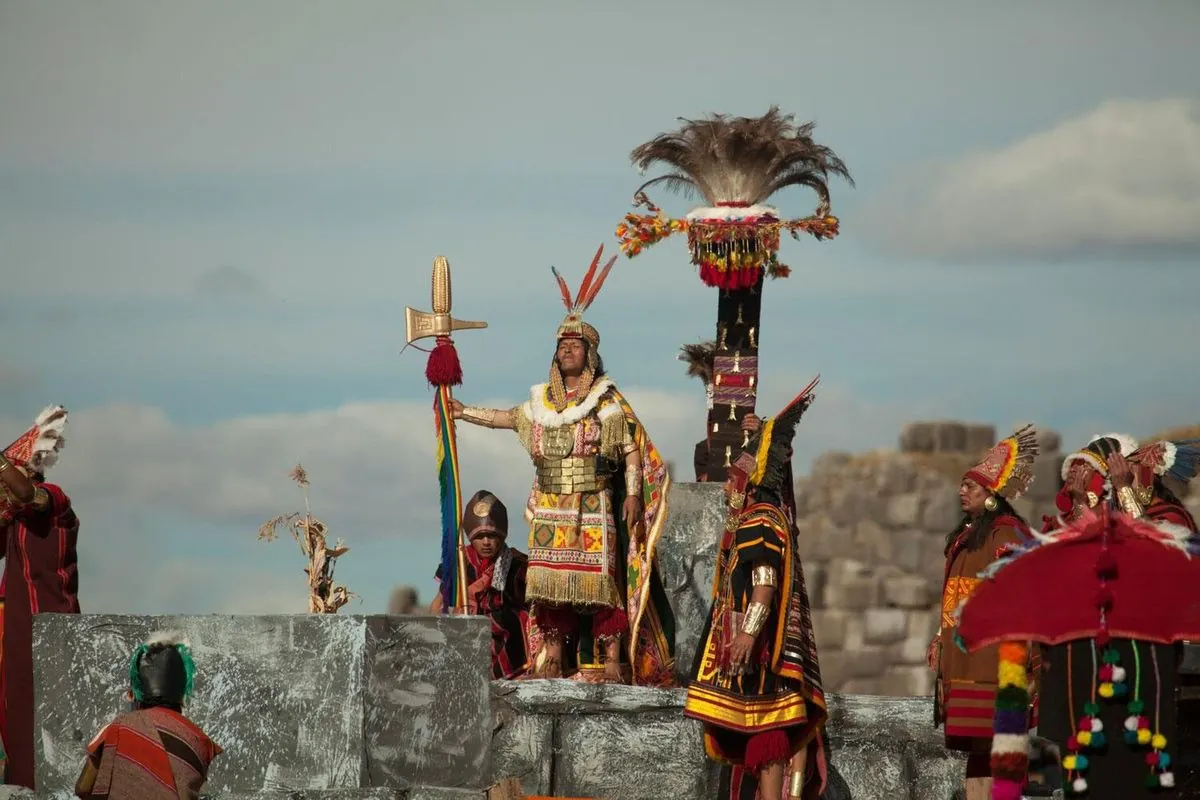
Inti was the most powerful deity in Inca mythology and was directly associated with the emperor, who was believed to be his descendant. As the sun god, he was responsible for providing light, warmth, and the energy needed for crops to grow in the harsh Andean environment. The Incas built major temples dedicated to him, especially in Cusco, where the elite performed important ceremonies. The Inti Raymi festival was one of the most significant religious celebrations, held during the winter solstice to honor him and ensure agricultural abundance for the new cycle.
Pachamama was the goddess of earth, fertility, and agricultural productivity, considered the source of food and life. She represented the living earth itself, including soil, mountains, and natural resources. The Incas believed that any extraction from the land required reciprocity, so offerings were made before planting, harvesting, or mining. Rituals often involved burying food, coca leaves, or chicha as a form of gratitude. Her worship continues today in Andean communities, reflecting a lasting respect for ecological balance and sustainable living.
Viracocha was the supreme creator deity who formed the universe, the sun, the moon, and all living beings. According to myth, he emerged from Lake Titicaca during a time of darkness and chaos to bring order and civilization. He created humanity and then traveled across the Andes, teaching people laws, agriculture, and social organization. Unlike other gods, Viracocha was not always directly worshipped in daily rituals, but he was revered as the ultimate source of existence and authority above all other deities.
Mama Quilla was the goddess of the moon and played a crucial role in regulating time through lunar cycles, which were essential for agriculture and ceremonies. She was also considered the protector of women, overseeing marriage, fertility, and childbirth. The Incas believed that lunar eclipses occurred when Mama Quilla was attacked, often by a mythical creature, and rituals were performed to restore her light. Her influence was closely tied to the calendar system, helping guide planting and harvesting seasons.
Illapa was the god of thunder, lightning, and rain, and one of the most important deities for agricultural survival in the Andean highlands. He was believed to control storms and water, which were essential for crop growth in a region with extreme climate conditions. Depicted as a warrior with a sling and weapon, he symbolized both destructive and life-giving forces. People prayed to Illapa during droughts or when rain was needed, and offerings were made to ensure balanced weather and successful harvests.
Inca mythology includes several creation stories that explain how the world, humanity, and the natural order came into existence. These narratives reflect the Incas’ understanding of the universe as a sacred and carefully balanced system governed by powerful deities.
One of the most important creation myths centers on Viracocha, the supreme god who emerged from Lake Titicaca during a time of darkness. He created the sky, earth, sun, moon, stars, and all living beings. According to the legend, he first formed a race of giants, but they became chaotic and disobedient, so he destroyed them with a great flood. After this, he created humans from stones and gave them knowledge, order, and civilization before traveling across the Andes to continue his teachings.
Another key story explains how Viracocha shaped the celestial bodies. After bringing light to the world, he created Inti, the Sun God, and Mama Quilla, the Moon Goddess, to regulate time and life cycles. The stars were also formed to guide humanity and maintain cosmic balance. These celestial beings were believed to influence agriculture, seasons, and human destiny, making the sky an essential part of Inca spirituality.
In Inca tradition, Lake Titicaca is considered the birthplace of humanity. According to the myth, Viracocha created the first humans there and then sent them to different regions to populate the world. Some versions also say that the first Inca rulers emerged from caves or sacred places in the Andes, chosen by the gods to bring order and establish civilization. This belief reinforced the sacred connection between geography, ancestry, and divine origin.
In Inca mythology, animals and natural symbols were considered sacred. They represented spiritual forces and linked the physical world with the divine. Many of these symbols also appeared in art, architecture, and religious rituals. This reflects the deep connection between nature and spirituality in Inca culture.
The condor was one of the most sacred animals in Inca belief and symbolized the upper world or the heavens (Hanan Pacha). It was seen as a messenger between humans and the gods due to its ability to fly at high altitudes near the sky. The condor represented power, freedom, and spiritual connection. In rituals, it was associated with the sun and often linked to Inti, reinforcing its divine importance.
The puma symbolized strength, wisdom, and the earthly world where humans lived (Kay Pacha). It was considered a protector and a symbol of authority and leadership. The city of Cusco was even designed in the shape of a puma, reflecting its importance in Inca urban planning and cosmology. The animal represented balance, courage, and control over the physical world.
The serpent represented the underworld (Ukhu Pacha) and symbolized wisdom, transformation, and regeneration. It was associated with fertility and the cycles of life and death. In Inca cosmology, the serpent connected the spiritual and physical realms, showing the continuous flow of life energy beneath the earth.
The Chakana, or Inca Cross, was one of the most important sacred symbols in Inca culture. It represented the three levels of existence: the upper world (gods), the middle world (humans), and the underworld (ancestors). It also symbolized balance, harmony, and the connection between all aspects of the universe. The stepped design reflected the Andes Mountains and the spiritual structure of Inca cosmology.
You my also like: Souvenirs from Peru: suthentic keepsakes from the Andes
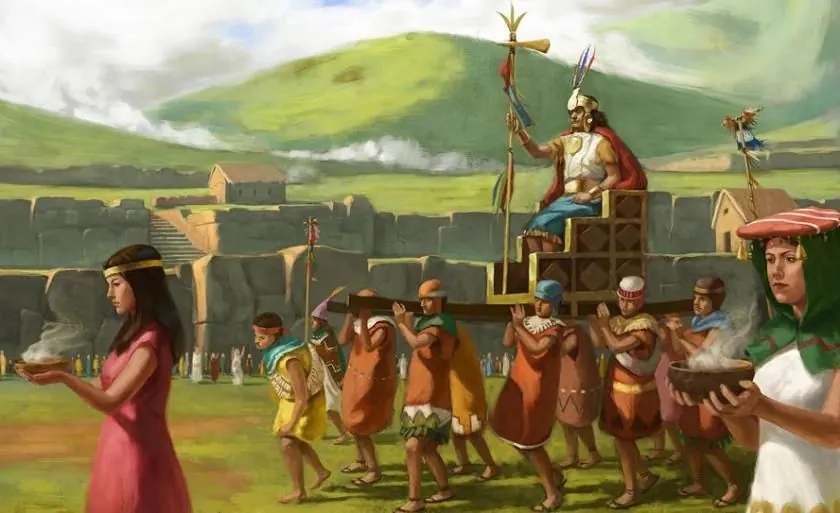
Inca mythology continues to strongly influence Andean culture. It shapes traditions, beliefs, and everyday practices that remain alive in many communities today. Ancient stories about gods like Inti and Pachamama still guide agricultural rituals. In these rituals, offerings are made to the earth to ensure fertile land and good harvests. Festivals such as Inti Raymi preserve Inca religious heritage. They are celebrated each year in Cusco as a tribute to the Sun God. In addition, the Inca worldview reinforces respect for nature. Mountains, rivers, and the land are still considered sacred. This lasting influence helps maintain cultural identity and connects modern Andean societies with their ancestral past.
The Inca Empire is rich in legendary stories and myths that explain its origins, divine protection, and sacred geography. These narratives were passed down orally and helped strengthen cultural identity and religious beliefs across the Andes.
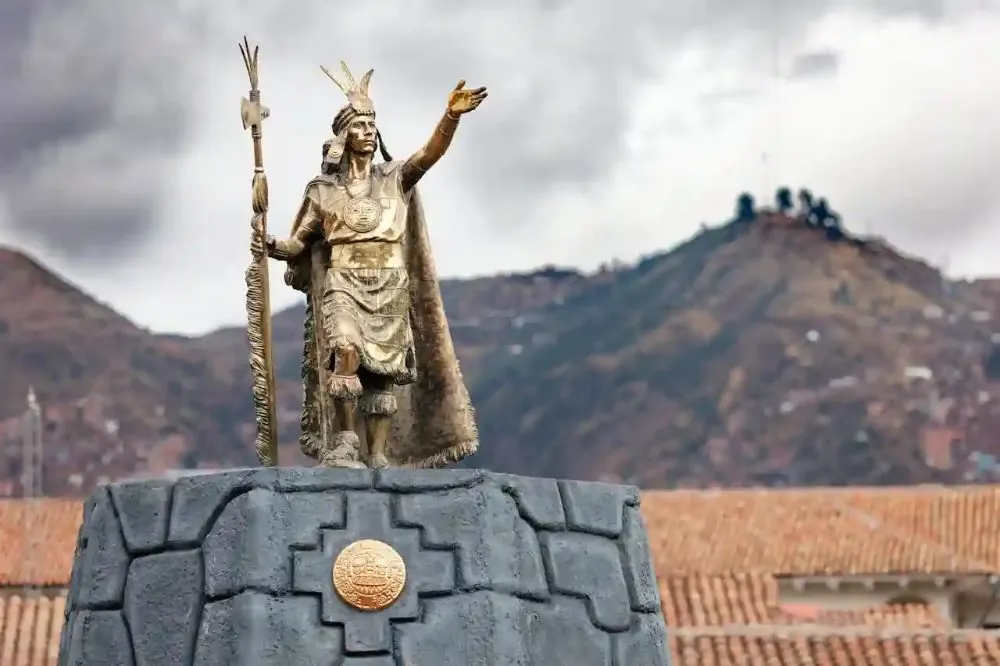
This is one of the most important foundation myths of the Inca Empire. According to the story, Manco Cápac and Mama Ocllo, children of the Sun God Inti, emerged from Lake Titicaca. They were sent by Inti to find a place where a golden staff would sink into the earth, which indicated fertile land. That place became Cusco, the capital of the Inca civilization, where they taught people agriculture, social order, and civilization.
Another important myth tells the story of the Ayar brothers, who emerged from the caves of Pacaritambo after a great flood. Each brother represented different traits, but conflicts and power struggles led to their journey toward the Andes. Only one brother, Ayar Manco (later Manco Cápac), succeeded in establishing Cusco. This legend explains the divine origin of the Inca ruling family and their connection to sacred lands.
This myth describes how Viracocha, after creating the world, traveled across the Andes teaching humans important knowledge such as agriculture, laws, and social order. He was often misunderstood or disrespected by early humans, so he transformed or punished them before continuing his journey. Eventually, he disappeared into the ocean, promising to return, which reinforced his role as a powerful and mysterious creator god.
In Inca mythology, the Sacred Valley was believed to be formed by divine forces to serve as a fertile and protected area for agriculture. The Incas saw it as a gift from the gods, surrounded by mountains considered sacred protectors. This myth reinforced the idea that the landscape itself was alive and spiritually significant, directly linked to the gods’ will.
Inca mythology shares many elements with other Andean belief systems, such as the worship of nature and sacred deities, but it also presents key differences in structure, political influence, and organization. The Incas unified diverse spiritual traditions into a centralized system that supported their empire, while other Andean cultures maintained more local and flexible religious practices.
The following table highlights the main differences between both belief systems.
| Aspect | Inca Mythology | Other Andean Beliefs |
|---|---|---|
| Religious Structure | Highly centralized system controlled by the Inca state, with standardized rituals across the empire. | Decentralized systems where each community followed its own local rituals and traditions. |
| Political Connection | Strong link between religion and politics; the emperor was considered a divine descendant of Inti. | Less political integration; spiritual leaders were usually local and not tied to imperial authority. |
| Deities and Worship | Unified pantheon including major gods like Inti, Pachamama, Viracocha, and Mama Quilla. | Multiple local deities and mountain spirits (apus) varying from region to region. |
| Cosmology | Structured universe divided into three worlds: Hanan Pacha (upper), Kay Pacha (middle), Ukhu Pacha (underworld). | Cosmic views were more diverse, with different interpretations depending on the community. |
| Expansion and Influence | Incorporated and adapted beliefs from conquered peoples to unify the empire under one system. | Belief systems remained independent and closely tied to specific ethnic groups or regions. |
| Ritual Practices | State-organized ceremonies such as Inti Raymi, performed across the empire. | Local rituals focused on agriculture, mountains, and ancestral worship specific to each community. |
Nature played a central role in Inca mythology because it was considered sacred and deeply connected to the divine. The Incas believed that mountains, rivers, the sun, the moon, and the earth were living forces with spiritual power that influenced human life and the balance of the world. Mountains, known as apus, were seen as protective spirits that watched over communities, while rivers and lakes were essential for life and agriculture and were therefore worshipped. The sun and moon were regarded as divine beings that regulated time, seasons, and natural cycles. This belief system created a strong respect for nature and encouraged rituals and offerings to maintain harmony between humans and the environment.
You my also like: Traditional Peru dances: a cultural guide
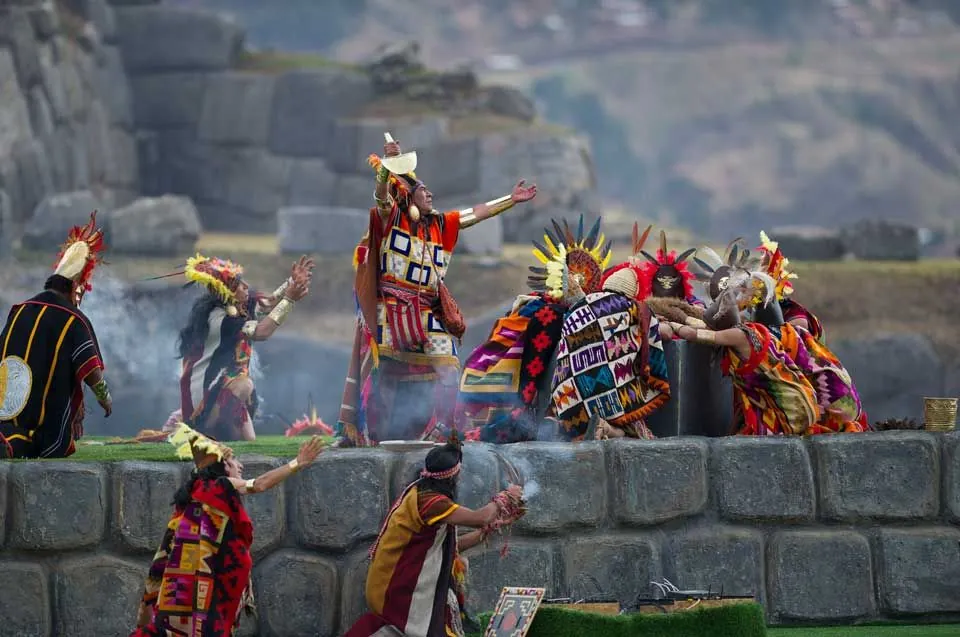
Inca mythology continues to influence modern Peruvian culture through traditions, festivals, and the way many communities understand nature and identity. Ancient beliefs are still present in celebrations like Inti Raymi in Cusco, where the Sun God is honored through ceremonies that recreate Inca rituals. Offerings to Pachamama are also still practiced in rural Andean areas as a way to maintain harmony with the earth and ensure good harvests. In addition, Inca symbols and stories remain present in art, textiles, music, and storytelling, reflecting a deep cultural connection to ancestral heritage. This legacy helps preserve a strong sense of identity and respect for nature across Peru.

Hi, I'm Kevin, a Peruvian who loves Andean cultures and is proud of my country. On this blog, I share useful and reliable information so you can discover Peru's history, nature, and authentic traditions.
Leave a comment


'/%3E%3Cpath%20fill='%23b2b2b2'%20d='M241%20382q0%2016%2017%2026%2017%2011%2042%2011t42-11q16-11%2017-26V269H241'/%3E%3Cpath%20fill='%239f7e00'%20d='M241%20379q0%2014%208%2023%209%209%2021%209%2014%200%2021-9%209-9%209-23V269h-59'/%3E%3Cpath%20d='M241%20339v-70h59v110q0%2014-9%2023l-6%205v-68h-15v72q-8%200-14-4v-68zm59%2040c0%2022%2015%2032%2029%2032%2021%200%2030-18%2030-32v-40h-59'/%3E%3Cpath%20fill='%239f7e00'%20d='M266%20277v5h2v12h-3v-5h2v-5h-9v5h2v5h-4v9h3v18h-5v10h34v-10h-5v-18h3v-9h-4v-5h2v-5h-9v5h2v5h-3v-12h2v-5zm42%20101q0%2010%206%2017%206%206%2015%207%2010-1%2016-7%206-7%206-17v-29h-43'/%3E%3Ccircle%20fill='%230044ad'%20cx='329.5'%20cy='372'%20r='6'/%3E%3Cellipse%20fill='%230044ad'%20cx='300'%20cy='340'%20rx='16'%20ry='21'/%3E%3C/svg%3E)