Av Retamayoc L-10, San Sebastián 08002
- +51 940 809 144
- Travel Blog
- About Us
- Contact Us
Secure your spot on the Inca Trail 2026. Journey beyond the ordinary Secure your spot today
Av Retamayoc L-10, San Sebastián 08002
Chat to a Andean Road Peru
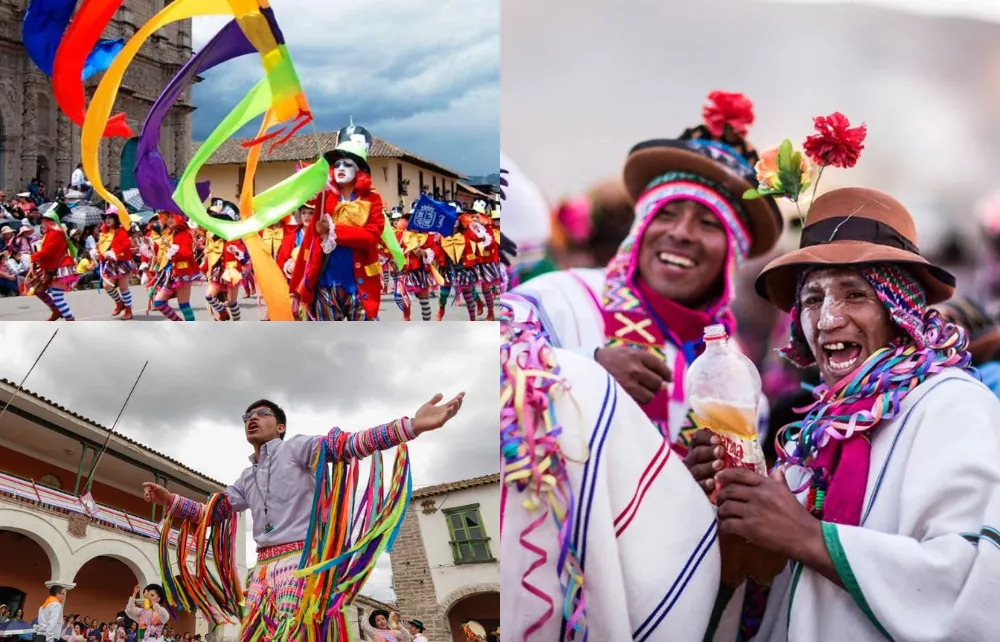
Carnivals in Peru are one of the country's most vibrant and authentic cultural expressions, always uniting tradition, music, and popular festivities in memorable celebrations. For this reason, what is known locally as Carnival transforms cities, towns, and rural communities into vibrant stages filled with colors, parades, water games, and ancestral rituals. From the Andean highlands to the sea and the Amazon, each region's unique customs, dances, and flavors come together in a unique cultural mosaic.
While Peruvian carnivals certainly represent a celebration and a series of events welcoming the rainy season, they also symbolize community cohesion and the continuity of traditions, passed down from one group to another each year. Typical costumes, folk music, and regional cuisine all come together, inviting locals and visitors alike to experience the country at its most joyful and colorful.
Carnival in Peru is one of the country's most significant popular festivals, a collective celebration in towns and villages where joy, music, dance, and rituals come together. It's a celebration that takes place mainly between February and March, before the start of Lent, with very unique and distinct characteristics in different parts of the country. During this time, towns and villages alike become stages for parades, colorful costumes, water fights, and diverse expressions that showcase the country's enormous cultural diversity.
Its cultural importance goes far beyond the festive aspect: Carnival is a living legacy of Peruvian mestizaje, where pre-Hispanic rituals related to fertility and nature intertwine with colonial influences. These festivities help build collective identity, foster community integration, and allow for the transmission of customs, music, and traditional knowledge from parents to children, solidifying their position as one of the central expressions of Peru's cultural heritage.
You may also like: Altitude Sickness: What it is, causes, symptoms and how to prevent it
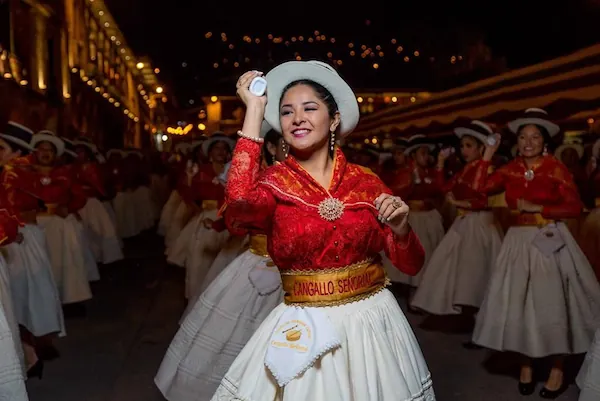
Carnivals in Peru are the result of an intense cultural fusion that dates back to pre-Hispanic times, as ancient Andean civilizations celebrated rituals connected to the agricultural cycle, the fertility of the land, and gratitude to nature. These practices of collective celebrations, accompanied by music, dance, and community participation, underpinned the celebration of Carnival as a privileged space for expressing festive spirit.
With the arrival of colonization, these ancestral practices merged with festivities brought from Europe, especially those preceding the Christian Lent. Over the centuries, Peruvian Carnival has been an adaptation of the traditions of each region, becoming a dynamic and richly diverse cultural expression. Peruvian Carnival maintains contact with the past while reinventing itself in the present, keeping customs alive and reinforcing the country's cultural identity.
Carnival in Peru is celebrated with great intensity thanks to a set of traditions and customs that are repeated year after year, but which take on their own nuances in each region of the country. These practices not only bring color and fun to the celebration, but also fulfill a symbolic, social, and cultural role, strengthening collective identity and the sense of community. Below are some of the most representative traditions that are an essential part of Peruvian Carnival.
The yunza, also known as cortamonte, is one of the most emblematic traditions of Carnival in Peru. It consists of decorating a tree with gifts, balloons, and typical products, around which the community dances to the rhythm of traditional music until the tree is cut down. This ritual symbolizes abundance, the fertility of the land, and the spirit of community cooperation.
During Carnival, it's common for the streets to be filled with water, talcum powder, and paint games, especially among young people and families. This custom represents purification and renewal, and reinforces the playful and spontaneous nature of the celebration, transforming public spaces into a stage for social interaction.
Traditional parades and dance groups are organized groups that travel through streets and plazas in colorful costumes, performing choreographed routines and playing music typical of each region. These parades express local stories, social satire, and elements of cultural identity, making them one of the main visual attractions of Carnival.
Folk music and dances accompany all Carnival celebrations. Huaynos, carnival dances, pandillas, and other regional rhythms set the pace of the festivities, allowing entire generations to participate and keep their traditions alive.
Food plays a central role during Carnival in Peru. Each region offers traditional dishes prepared especially for this time of year, strengthening the connection between the celebration, local identity, and a sense of community.
The carnivals of the Peruvian highlands are celebrations lived with particular fervor, and they bear a strong Andean imprint. Traditional dances and music, community rituals, and agricultural symbolism intertwine, forming some of the most genuine and authentic celebrations in the country.
Below, you will find information on the main carnivals in this part of Peru, as well as some of their most easily noticeable characteristics.
You may also like: Inca Calendar Solar: the astronomical wisdom of the inca empire
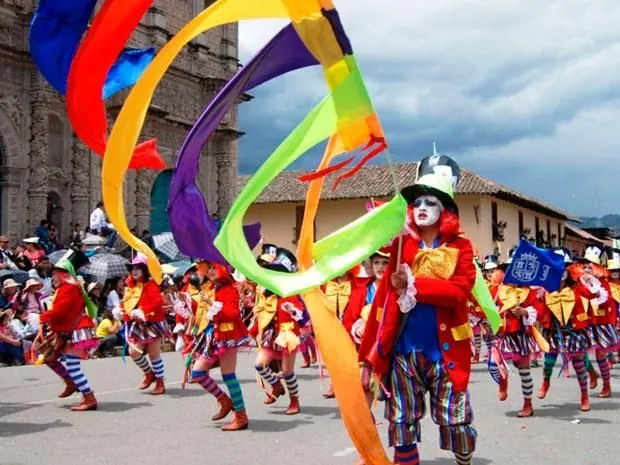
The Cajamarca Carnival, celebrated from February 14 to 18, 2026, is considered the most important and representative in Peru. During these days, the city transforms into a grand festive stage where troupes, carnival groups, and parades fill the streets with music, color, and satire. One of the most symbolic moments is the arrival of Ño Carnavalón, a character who embodies the joyful and carefree spirit of the festival. Traditional Cajamarca music, accompanied by playful songs and folk dances, reinforces the participatory and community-oriented nature of this celebration.
The Cusco Carnival takes place from February 15th to 17th, 2026, with a strong connection to Andean traditions. The celebration combines ancestral rituals with modern festive expressions, with the yunza or cortamonte being one of the central events. Families and entire neighborhoods gather to dance to the rhythm of Andean music, while water and talcum powder games fill the streets with joy. Typical cuisine, especially the traditional Cusco stew (puchero cusqueño), accompanies these festivities and reinforces the sense of community and shared celebration.
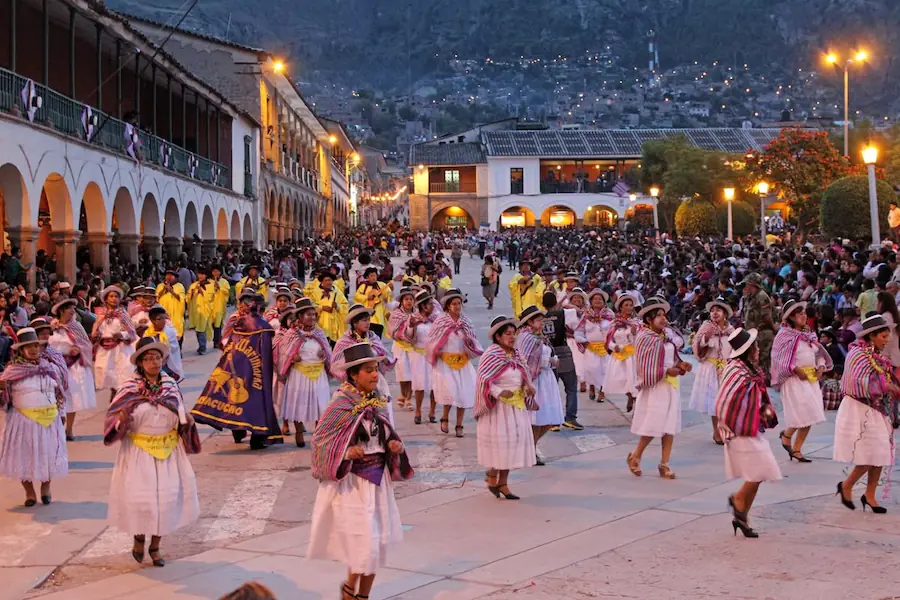
From February 15th to 17th, 2026, the Ayacucho Carnival stands out for its profound cultural value and strong regional identity. Groups of performers parade through the streets, singing traditional songs accompanied by Andean instruments, with lyrics that blend humor, social commentary, and tradition. Folk dances and typical costumes reflect the history and cultural pride of the region. This carnival is characterized by the organized participation of neighborhoods and communities, becoming a space for social gathering and integration.
The Puno Carnival, also celebrated from February 15 to 17, 2026, is distinguished by its rich musical and dance traditions, typical of the Peruvian highlands. During this time, Andean music and traditional dances accompany neighborhood celebrations and community gatherings. The colorful costumes and symbolic rituals reflect the Andean worldview and the close relationship of the people with nature. Although it shares the spotlight with other local festivities, the carnival maintains its own unique character, deeply rooted in the cultural identity of Puno.
The Huancayo and Mantaro Valley Carnival takes place from February 15th to 17th, 2026, and is known for its joyful, family-friendly, and community-oriented atmosphere. The festivities are experienced through playful songs, traditional dances, and the ever-present yunza, a tree-cutting ceremony that brings together locals and visitors to Andean music. Groups of performers parade through the streets in traditional costumes, reinforcing a sense of regional identity. This carnival is notable for preserving the valley's ancestral customs and for the active participation of the community in each of its activities.
The carnivals celebrated along the Peruvian coast unfold in a warm, joyful, and spontaneous atmosphere, where music, water games, and social interaction are undoubtedly the main attractions. Among the traditions that fuel these carnivals are the Creole and Afro-Peruvian ones, celebrations that take place primarily in neighborhoods and public spaces, reviving the festive and social spirit of coastal cities.
Below are some of the most representative carnivals of the Peruvian coast.
You may also like: 15 best beaches of Peru for your next adventure
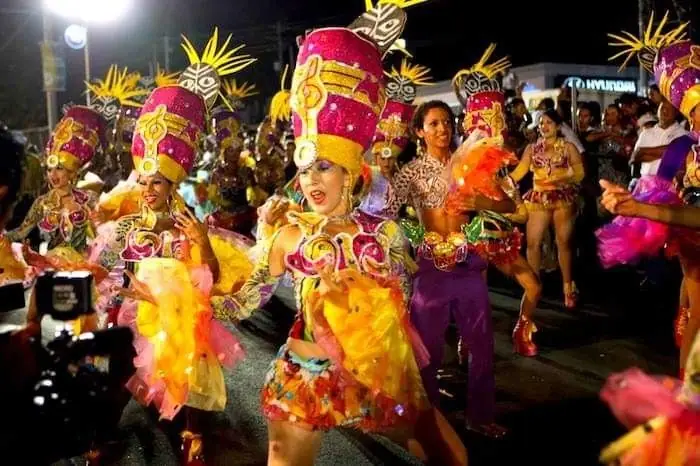
The Catacaos Carnival is celebrated in the district of Catacaos, in the province of Piura, and usually takes place in mid-February. It is one of the most traditional festivals on the northern coast of Peru and is celebrated primarily in the streets and neighborhoods of the district. Water games, folk music, and neighborhood gatherings are central to the celebration. The active participation of the community and the local cuisine reinforce the family-oriented and cultural character of this carnival.
The Chincha Carnival takes place in the city of Chincha, in the Ica region, and is generally celebrated between mid- and late February. It is notable for its strong Afro-Peruvian influence, visible in the music, dance, and rhythm that accompany the celebrations. Water games and neighborhood activities fill the city with energy and color, reflecting the cultural pride and Afro-Peruvian heritage of the southern coast of Peru.
The Lima Carnival is celebrated in various districts and neighborhoods of Metropolitan Lima and usually takes place in early to mid-February. It doesn't have a single centralized event, but rather consists of numerous spontaneous neighborhood celebrations. Water games, music, and community gatherings keep the carnival tradition alive in an urban context, adapted to the diverse rhythm of the capital.
The Trujillo Carnival is celebrated in the city of Trujillo, in the La Libertad region, and usually takes place in mid-February. The festivities include parades, festive music, and social activities in various neighborhoods. Water games and community participation are essential parts of the celebration, reflecting the cultural identity and festive spirit of Peru's northern coast.
The Barranca Carnival takes place in the city of Barranca, in the Lima region, and is generally celebrated between mid- and late February. It is a popular and intimate festival, deeply rooted in local neighborhoods and communities. Music, water games, and family gatherings create a simple yet highly participatory festive atmosphere, notable for its authenticity and the strong social bonds it fosters among neighbors.
Carnivals in the Peruvian Amazon stand out for their connection with nature and the active participation of the community, which takes place between the beginning and middle of February through characterizations with tropical music, native dances and symbolic rituals, which refer to the cultural identity of the area.
The Iquitos Carnival is celebrated in the city of Iquitos, in the Loreto region, and generally takes place in early to mid-February. It is one of the most representative carnivals of the Peruvian Amazon and is known for its popular and community-oriented character. The celebrations include parades, tropical music, and dances that are experienced intensely in neighborhoods and public spaces. One of the central elements is the humisha, a tree adorned with gifts around which people dance and share, symbolizing abundance and community unity.
The Tarapoto Carnival takes place in the city of Tarapoto, in the San Martín region, and is usually celebrated in mid-February. It is characterized by a festive atmosphere that blends Amazonian traditions with Andean and coastal influences. The streets fill with music, dancing, and water games, while the humisha (a traditional Andean dance) plays a central role in the festivities. Regional cuisine and the active participation of the local population reinforce a sense of cultural identity during the carnival.
The Pucallpa Carnival is celebrated in the city of Pucallpa, in the Ucayali region, and generally takes place between mid- and late February. This festival is known for its traditional Amazonian dances, tropical rhythms, and community celebrations in neighborhoods and open spaces. The humisha (a decorated tree) once again becomes an important symbolic element, accompanied by music, singing, and water games that involve people of all ages.
The Moyobamba Carnival takes place in the city of Moyobamba, in the San Martín region, and is usually celebrated in early to mid-February. Although it is better known for other cultural festivities, the carnival keeps Amazonian traditions alive, such as community gatherings, festive music, and water games. The celebration is experienced in a close-knit, family-oriented way, highlighting the connection between the community and its natural environment.
Experiencing Carnival in Peru is a vibrant experience filled with color, music, and tradition. To fully enjoy it and have an authentic and respectful experience, keep the following tips in mind:
These tips will help you fully enjoy one of the country's most colorful and representative celebrations.
You may also like: 10 Best museums in Cusco to visit
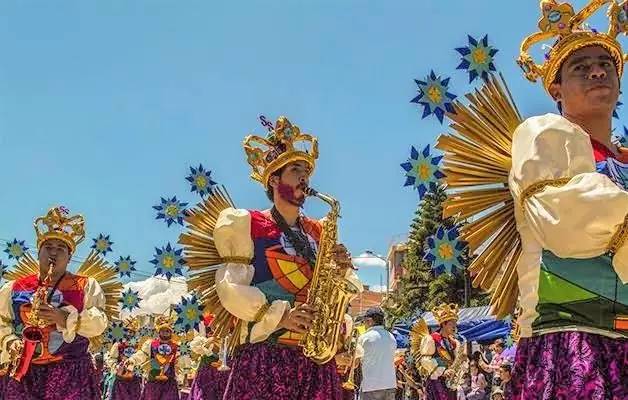
Carnival in Peru is much more than a celebration; it's a vibrant expression of the country's cultural diversity, where each region contributes its customs, rhythms, and meanings. From the highlands to the coast and the Amazon, Carnival becomes a space for community gathering, ensuring the continuity of ancestral traditions and reinforcing local identity through music, dance, and displays of popular ritual.
Experiencing Carnival is the perfect opportunity to connect with the essence of Peru, get to know its people from within, and participate in festivities brimming with symbolism and joy. Whether as a traveler or a local participant, attending these celebrations allows you to understand why Carnival has become one of the country's most colorful and authentic cultural expressions.

Hi, I'm Kevin, a Peruvian who loves Andean cultures and is proud of my country. On this blog, I share useful and reliable information so you can discover Peru's history, nature, and authentic traditions.
Leave a comment