Chat to a Andean Road Peru
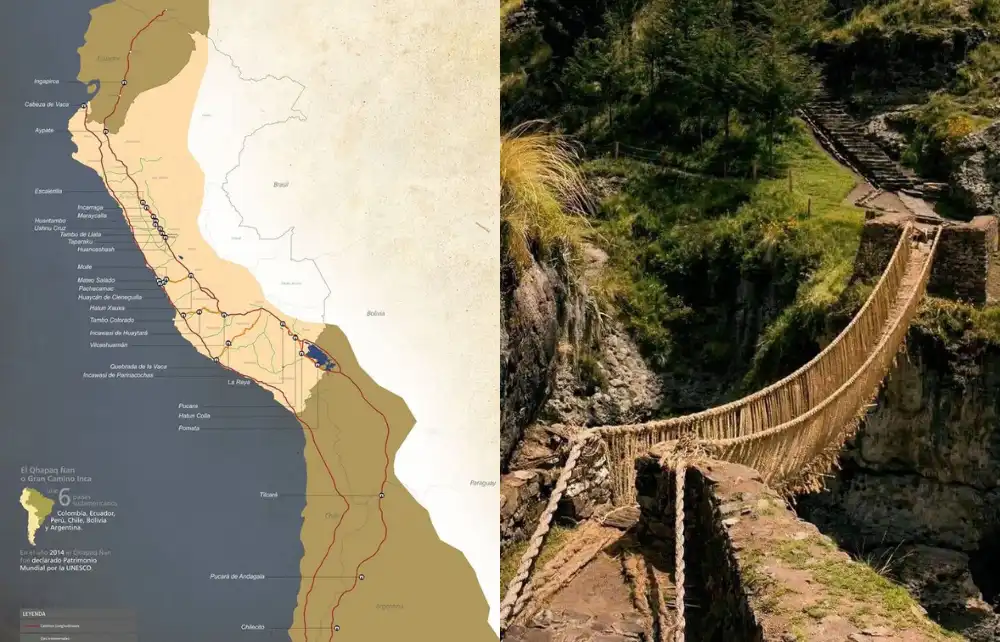
The Qhapaq Ñan, the great road network of the Inca Empire, was an impressive feat of engineering that connected the vast territories of Tahuantinsuyo throughout the Andes. This system allowed for the integration of diverse regions, facilitating the organization and control of the empire.
More than just roads, the Qhapaq Ñan was key to transportation, communication, and cultural exchange, leaving a historical legacy that still stands out today for its value and significance.
The Qhapaq Ñan, known as the Great Inca Road, was an extensive network of roads that connected the territory of the Inca Empire (Tahuantinsuyo), linking different regions. Stretching over 30,000 kilometers, it traversed diverse landscapes such as mountains, valleys, deserts, and jungles, integrating what are now several South American countries. This road system was key to the political, economic, and social organization of the Incas.
More than just a network of routes, was a feat of advanced engineering, designed to adapt to the most complex geographical conditions. It facilitated the transport of goods, the mobilization of armies, and rapid communication through the chasquis, messengers who carried messages throughout the empire. Today, it is considered a symbol of the Inca legacy and a valuable cultural heritage recognized worldwide.
You may also like: Visit Peru in the winter for a unique and peaceful journey
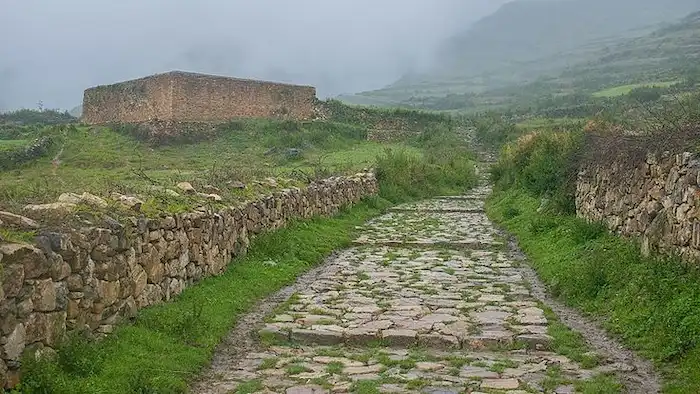
The Qhapaq Ñan has its origins in ancient pre-Incan roads that were utilized and improved by the Incas to construct a much more extensive and organized road network. The integration of local routes began among the earliest rulers; however, it was during the reigns of emperors such as Pachacuti and Tupac Yupanqui that the system reached its peak development, expanding alongside the territorial growth of the empire.
As the Tahuantinsuyo expanded, it connected key regions from southern Colombia to northern Argentina and Chile, primarily traversing Peru and Bolivia. This expansion allowed for efficient administration, facilitating trade, the mobilization of armies, and the rapid transmission of information. Over time, it became the main axis that sustained the unity and power of the Inca Empire.
The Qhapaq Ñan served as the main communication and transportation network of the Inca Empire, connecting cities, administrative centers, and productive regions throughout the Tahuantinsuyo. Officials, armies, and llama caravans carrying food, textiles, and other essential resources traveled along these roads. Its organization allowed the Incas to maintain political and economic control over such a vast territory.
One of the key elements of its operation was the messenger system run by the chasquis, who ran along sections of the road, delivering information quickly and efficiently. Additionally, along the Qhapaq Ñan, there were tambos, which were rest and supply points, ensuring the continuity of journeys. Thanks to this well-planned structure, the Incas achieved efficient administration and effective integration of their entire empire.
The Qhapaq Ñan was made up of an extensive network of roads that connected various territories of the Inca Empire, adapting to the complex geography of the Andes. These routes not only facilitated communication but also economic and cultural exchange between very different regions.
This was the main route of the system, running along the Andes Mountains from Colombia to Chile and Argentina. This route passed through important Inca administrative centers and cities, allowing for the rapid mobilization of armies and officials. It also had strategically located tambos (way stations) to ensure supplies and rest along the way.
Parallel to the Pacific Ocean, this route crossed arid and desert areas, especially in Peru. It was fundamental for connecting coastal settlements and facilitating the transport of marine products such as dried fish and salt, as well as goods from other regions. Its layout demonstrates the Inca ability to adapt to extreme conditions.
These routes connected the Andes Mountains with the coast, traversing valleys and ravines. They facilitated the exchange of goods between different ecological zones, such as agricultural products from the highlands and marine resources from the coast. They also played a key role in the economic and social integration of the empire, strengthening relationships between communities.
These routes connected the Andean regions with Amazonian areas, facilitating access to resources such as fruits, medicinal plants, timber, and exotic products. These routes, found mainly in Peru and Bolivia, were narrower and more challenging due to the dense vegetation and humid climate, but they were essential for diversifying the empire's resources.
Thanks to this network of routes, the Qhapaq Ñan efficiently integrated the entire Inca Empire (Tahuantinsuyo), becoming one of the most outstanding achievements of Inca engineering.
In Peru, the Qhapaq Ñan preserves some of the best-preserved and most accessible sections of the entire Inca road network. These roads stand out not only for their historical value but also for their tourism potential, as they allow visitors to explore ancient routes used by the Incas amidst breathtaking Andean landscapes.
One of the most well-known sections is the road that connects Cusco with Machu Picchu, part of the famous Inca Trail. This route combines nature, archaeology, and culture, making it one of the most sought-after experiences for travelers from around the world.
Located in the Huánuco region, this section is notable for its connection to one of the main Inca administrative centers. Here, you can appreciate wide stone causeways and architectural remains that demonstrate the importance of the site within the empire.
In the north of the country, this section crosses Andean areas between Cajamarca and Trujillo (La Libertad region). It is less traveled, but preserves original sections that allow visitors to appreciate Inca engineering in a more tranquil setting.
This route connects southern Andean regions such as Ayacucho and Abancay. It is characterized by its mountainous landscapes and the presence of communities that still maintain traditions linked to these ancestral roads.
These sections of the Qhapaq Ñan in Peru not only allow for a better understanding of the magnitude of the Inca Empire, but also provide a direct experience of its historical and cultural legacy.
You may also like: Peruvian wedding traditions: a complete guide
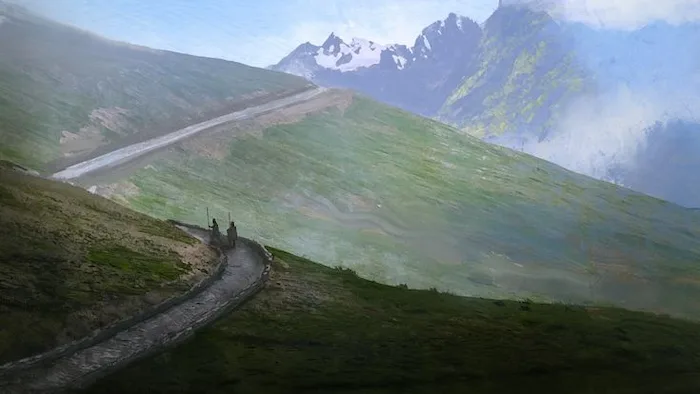
The Qhapaq Ñan was used by various actors within the Inca Empire, including officials, the army, merchants, and the chasquis, messengers who carried messages at high speed across the territory. This road system served primarily for communication, administrative control, and the transport of goods, enabling the movement of food, textiles, and strategic resources between different regions of Tahuantinsuyo. Thanks to its efficient organization, the Qhapaq Ñan was key to maintaining the unity and functioning of the empire.
The chasquis were messengers of the Inca Empire who played a fundamental role in the functioning of the Qhapaq Ñan, as they were responsible for transmitting information at high speed across this extensive network of roads. They worked in a relay system, covering short stretches and delivering messages (often in the form of quipus or orally) to the next runner. Thanks to their physical endurance, discipline, and organization, the chasquis maintained efficient communication between different points of the Tahuantinsuyo, even across difficult terrain and over great distances.
The Qhapaq Ñan was constructed using engineering highly adapted to the Andean geography, allowing the Incas to traverse mountains, deep valleys, deserts, and jungles. Using local materials such as stone and earth, they designed roads with staircases, retaining walls, and drainage systems to ensure their stability. They also built suspension bridges made of plant fibers to cross rivers and ravines, demonstrating a profound understanding of the environment and a remarkable capacity for organization in carrying out projects under extreme conditions.
Today, the Qhapaq Ñan maintains profound cultural value, representing not only the legacy of the Inca Empire but also a living connection to the traditions of Andean communities. Many sections are still used by local people for trade and transportation, preserving ancestral practices. Furthermore, its recognition as cultural heritage promotes its conservation and fosters sustainable tourism, allowing new generations to appreciate its history, identity, and significance in the modern world.
The Qhapaq Ñan was declared a World Heritage Site by UNESCO in 2014, recognizing its immense historical, cultural, and social value to humanity. This distinction highlights not only the magnitude of the Inca road network but also its importance as a symbol of integration among peoples and cultures throughout the Andes.
Being a World Heritage Site implies a commitment from the participating countries (such as Peru, Bolivia, Ecuador, Colombia, Chile, and Argentina) to protect, conserve, and promote this legacy for future generations. It also fosters research, responsible tourism, and the appreciation of the living traditions associated with this ancient road system.
The Qhapaq Ñan connects a wide variety of tourist destinations renowned for their historical, cultural, and scenic value. Along this network of roads, you can find important archaeological sites and routes that allow you to experience the legacy of the Inca Empire firsthand, especially in Peru.
Machu Picchu is one of the world's most iconic destinations and is part of the Qhapaq Ñan via the Inca Trail. This site combines architecture, history, and breathtaking landscapes, offering a unique experience for visitors.
Located in the Sacred Valley, Ollantaytambo was an important military, agricultural, and religious center. Its terraces and stone structures showcase the advanced engineering of the Inca.
Sacsayhuaman is an imposing fortress near Cusco, famous for its enormous, perfectly fitted stone blocks. It was part of the empire's defensive and ceremonial system.
Huánuco Pampa was one of the main administrative centers of the Qhapaq Ñan (Inca Road). It is notable for its large central plaza and the typical urban planning of the Incas.
Vilcashuamán is an archaeological site that preserves temples and ceremonial structures. It was a key point within the road network and an important political center in its time.
These sites allow visitors not only to learn about the grandeur of the Inca Empire but also to explore part of this ancestral network that remains active today.
You may also like: Flora and fauna of the andes mountains
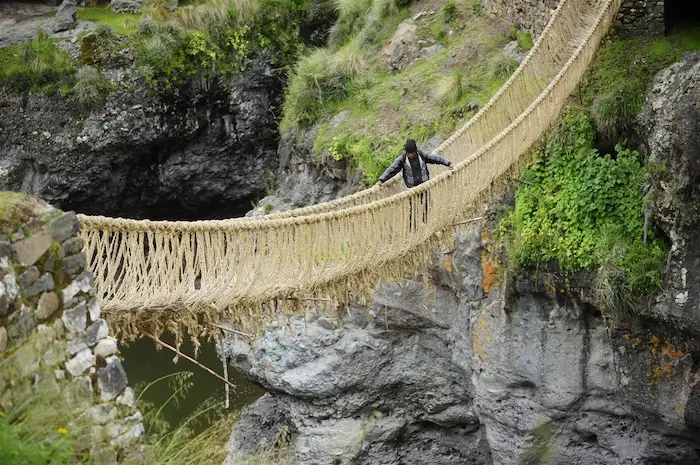
The Qhapaq Ñan was not only an extraordinary network of roads of the Inca Empire, but also a symbol of integration, organization, and knowledge of the environment. Through its routes, the Incas managed to connect vast territories and maintain an efficient system that united diverse cultures, economies, and landscapes throughout South America.
Today, this legacy continues to live on, not only as historical heritage, but as a cultural expression that is still part of the lives of many Andean communities. Traveling the Qhapaq Ñan is, in essence, a journey through history and a way to understand the grandeur of a civilization that left an indelible mark on the world.

Hi, I'm Kevin, a Peruvian who loves Andean cultures and is proud of my country. On this blog, I share useful and reliable information so you can discover Peru's history, nature, and authentic traditions.
Leave a comment