Chat to a Andean Road Peru
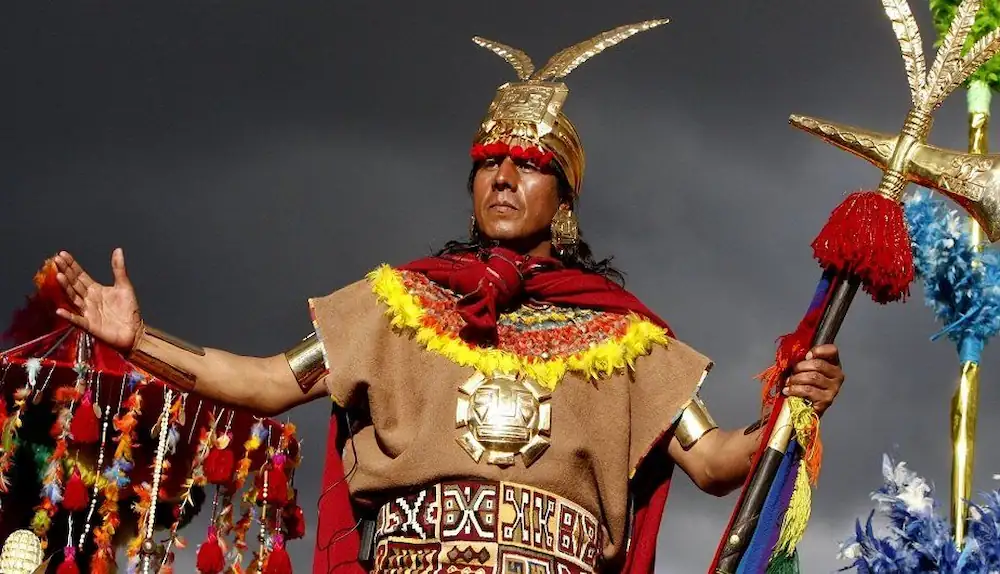
The Inca language and writing illustrate how the Inca civilization developed effective systems of communication without using a conventional written alphabet. By relying on spoken Quechua and symbolic tools such as quipus, the Incas recorded information, managed administration, and maintained social and economic order across their vast empire, ensuring the transmission of knowledge and cultural identity over generations.
The Inca language and writing system was unique among ancient civilizations, as it relied primarily on spoken communication rather than a formal written alphabet. The Incas used Quechua as the official language of the empire, allowing effective communication across diverse regions and cultures within the Tahuantinsuyo. This shared language played a key role in administration, social organization, and the transmission of traditions.
Instead of written texts, the Incas developed alternative methods to record and manage information. Tools such as quipus, along with strong oral traditions, enabled them to keep track of economic data, historical events, and social obligations. Together, these systems formed a sophisticated approach to communication that supported one of the largest empires in pre-Columbian America.
You may also like: 10 Mountains in Peru with the most spectacular views
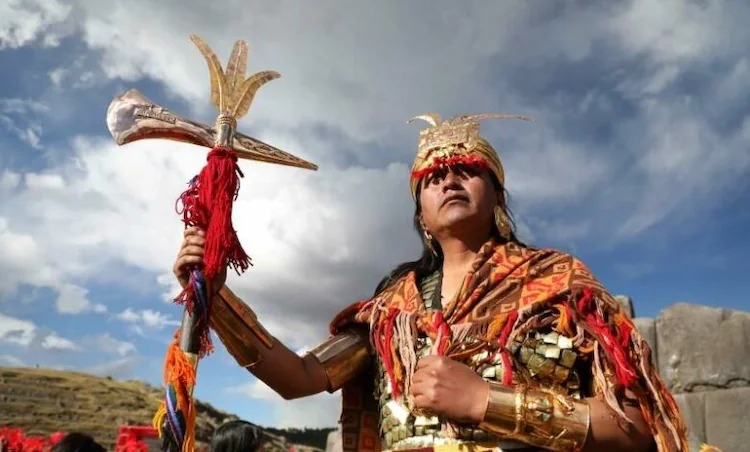
The origins of the Inca language are closely linked to Quechua, a language family that existed in the Andean region long before the rise of the Inca Empire. Rather than creating a new language, the Incas adopted and strengthened Quechua as a practical tool for communication, administration, and cultural integration. This strategic choice allowed them to unify diverse populations under a shared linguistic framework while respecting local traditions.
Quechua developed among Andean communities centuries before the Incas came to power. It emerged as a spoken language used for trade, social interaction, and ritual practices across the central Andes. Its structure, based on clear phonetic rules and agglutinative grammar, made it adaptable and easy to spread among different ethnic groups, which later contributed to its importance within the Inca state.
As the Inca Empire expanded across large parts of South America, Quechua was promoted as the official language of administration and governance. It was used by officials, messengers, and local leaders to transmit orders, manage resources, and maintain political control. This deliberate expansion helped standardize communication across vast territories, reinforcing unity and efficiency within the empire.
Despite its widespread use, Quechua was not a single, uniform language. Regional variations and dialects developed as it spread into different geographic and cultural areas. These differences reflected local influences and adaptations, resulting in multiple forms of Quechua that are still spoken today. This linguistic diversity highlights the flexibility of the Inca language system and its lasting impact on Andean cultures.
The Incas maintained effective communication across their vast empire through a combination of spoken language, organized messengers, and structured routes. Quechua served as a common language, allowing officials and local communities to understand one another despite regional differences. This linguistic unity was essential for administration, trade, and the enforcement of imperial policies.
In addition, the Incas developed an efficient messenger system known as the chasquis. They traveled along an extensive network of roads to deliver verbal messages and quipus. These relay runners enabled rapid communication between distant regions. This system ensured that information, orders, and news could move quickly across the empire without written documents.
The Incas did not have a written language in the conventional sense, as they did not use an alphabet or written symbols to record spoken words. Instead, they relied on a highly developed system of oral communication supported by visual and symbolic tools. Knowledge, history, laws, and traditions were transmitted through storytelling, memorization, and formal recitation, ensuring continuity across generations.
To manage administration and record numerical data, the Incas used quipus. This system of knotted cords conveyed information through knots, colors, and spacing. Quipus were not a form of writing like those in other ancient civilizations. However, they served as an effective method for recording economic data, censuses, and possibly more complex information. This approach shows that the Inca civilization developed sophisticated alternatives to writing. These methods met the needs of a vast and organized empire.
The quipu was a unique and sophisticated system used by the Incas to record and manage information without written texts. It consisted of a main cord from which multiple subsidiary cords hung, each carrying knots arranged in specific patterns. This system allowed Inca administrators to store and transmit data accurately, playing a key role in governance, economic organization, and state control across the empire.
Quipus were typically made from cotton or camelid fibers such as alpaca or llama wool. The cords varied in length, thickness, and color, and different types of knots were tied at precise positions along the cords. These physical characteristics were not random; each element contributed to the meaning of the information recorded, forming a structured and intentional system of data representation.
One of the primary functions of the quipu was numerical record-keeping. The Incas used it to track population counts, agricultural production, taxes, and resource distribution. The placement and type of knots followed a decimal system, making quipus an efficient administrative tool for managing the economic and logistical needs of a vast empire.
Beyond numbers, some scholars suggest that quipus may have carried symbolic or narrative information. Variations in color, knot combinations, and cord arrangements could have represented categories, events, or social data. Although their full meaning has not been completely deciphered, this possibility indicates that quipus may have functioned as more than simple accounting tools, reflecting a complex and versatile method of information storage.
You may also like: Peru in March: climate, events and travel tips

The Incas recorded information and history through a combination of oral tradition, specialized memory practices, and quipus. Without a written alphabet, historical events, laws, genealogies, and cultural knowledge were preserved by trained individuals who memorized and recited information during ceremonies and official gatherings. This oral system ensured accuracy and continuity across generations.
Inca language and writing were central to this process, as Quechua served as the main medium for communication and record-keeping. Quipus complemented oral transmission by storing numerical and administrative data such as censuses, tribute, and agricultural production. Together, spoken narratives and knotted records formed an integrated system in which memory and material tools worked side by side. This approach allowed the Incas to manage a complex society and maintain historical awareness without relying on conventional written texts.
Oral tradition played a central role in Inca culture, serving as the primary means of preserving history, values, and collective identity. Stories, myths, laws, and genealogies were passed down through spoken narratives, often recited during ceremonies, rituals, and public gatherings. This practice ensured that knowledge remained alive and adaptable, reinforcing social cohesion across the empire.
Specialized individuals were responsible for memorizing and transmitting this information with precision, maintaining continuity between generations. Through oral tradition, the Incas preserved their worldview, religious beliefs, and historical memory, demonstrating that spoken knowledge was as vital to their civilization as written records were to other ancient societies.
Inca language and writing was a powerful tool for political control and social organization in the Inca Empire. By promoting Quechua as the official language, the Incas facilitated communication between rulers, administrators, and diverse ethnic groups spread across vast territories. This shared language helped strengthen imperial authority and reinforced a sense of unity among conquered populations.
The use of a common language also allowed the state to standardize laws, collect tribute, and manage resources more efficiently. Through language, the Incas exercised influence, transmitted ideology, and maintained order, demonstrating how communication functioned not only as a cultural element but also as a strategic instrument of power within the empire.
You may also like: Travel guide to Peru in February
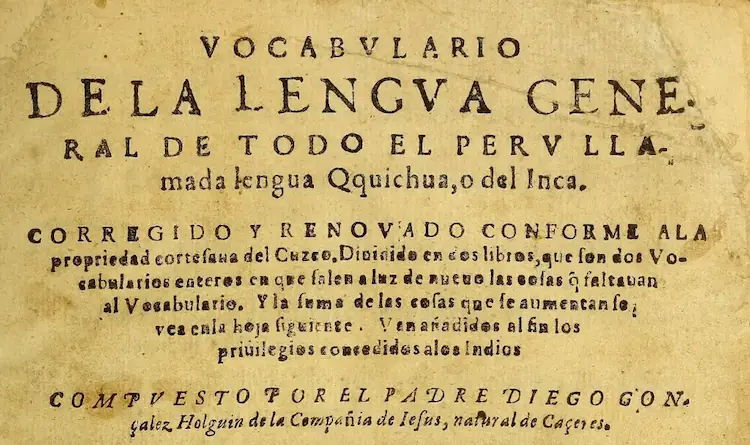
The legacy of Inca language and writing remains deeply rooted in Andean culture and identity. Quechua, once the administrative language of the Inca Empire, continues to be spoken by millions of people across South America, preserving linguistic traditions that date back centuries. Its survival reflects the strength and adaptability of Indigenous culture despite historical disruption and change.
Beyond daily communication, the Inca language has influenced regional customs, oral literature, place names, and cultural expressions. Today, it stands as a living connection to the Inca past, highlighting the enduring impact of Inca language systems on history, heritage, and cultural continuity in the Andes.

Hi, I'm Kevin, a Peruvian who loves Andean cultures and is proud of my country. On this blog, I share useful and reliable information so you can discover Peru's history, nature, and authentic traditions.
Leave a comment