Chat to a Andean Road Peru
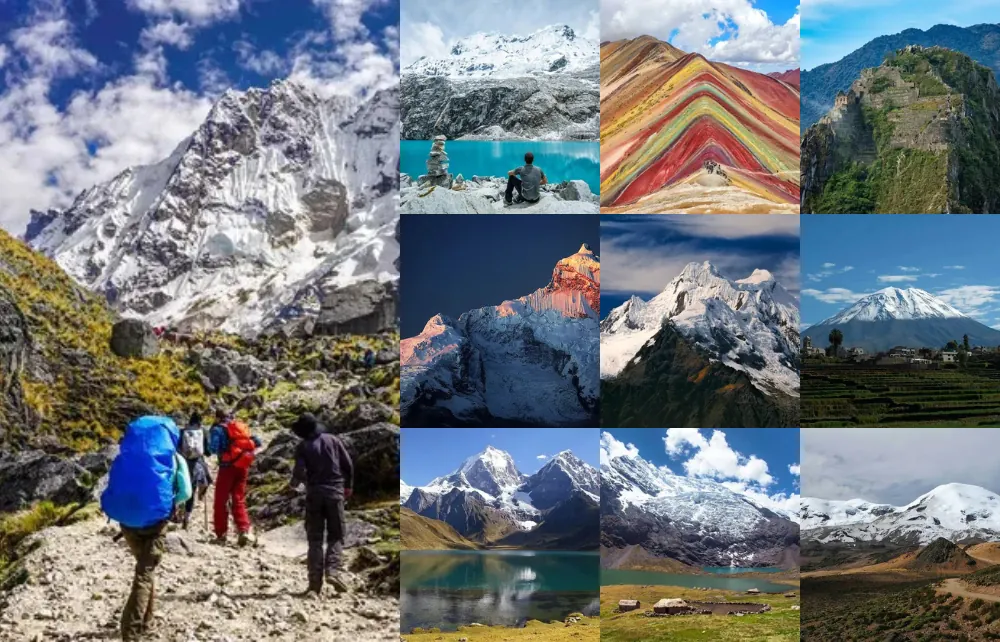
The mountains in Peru provide some of the finest vistas in South America and are situated approximately 1 mile above the ocean and are surrounded by deep valleys, ancient paths, and dramatic Andean landscapes. From snow-capped mountains to remote high-altitude routes, the mountains of Peru are true natural wonders and provide an incredible combination of adventure, biodiversity, and cultural heritage. Each location has its own unique beauty and therefore all visitors to Peru must include their to-see list for they will experience rare mountain vistas and an incredible outdoor experience.
The Andes of Peru are not a single continuous mountain range. Instead, they form an intricate network of mountain ranges spread across the country. As a result, Peru’s mountainous landscape is incredibly diverse. For this reason, the region features a wide variety of environments, including snow-capped peaks, deep canyons, high-altitude plateaus, and remote alpine areas. Each of these landscapes, in turn, offers a distinct and unique natural setting.
The structures that comprise the Andes in Peru are usually separated into three (3) main mountain ranges: The Western Cordillera, the Central Cordillera, and the Eastern Cordillera. Each mountain range has its own unique characteristics and climate. For example, some areas feature glaciated mountain peaks covered in ice, while others include volcano-dotted regions and forest-filled valleys. Because of this diversity, Peru offers an impressive variety of mountain scenery. As a result, the country is ideal for enjoying breathtaking views and a wide range of outdoor activities.
You may also like: Peru in March: climate, events and travel tips
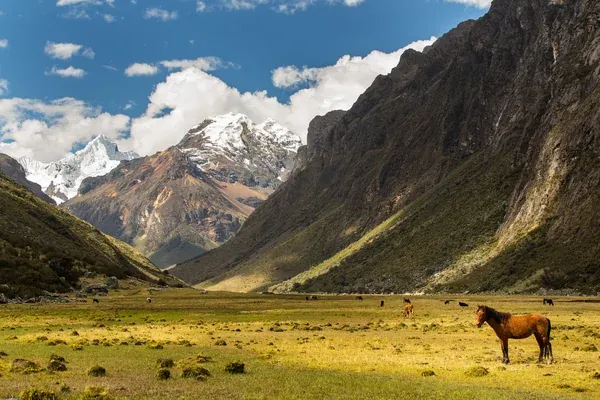
The mountains in Peru reach extreme elevations, with many peaks rising above 6,000 meters, which strongly influences their climate and natural conditions. Rapid temperature changes are common, with strong sunlight, cold winds, and freezing nights at higher altitudes.
Climate varies by elevation and season, with distinct dry and wet periods. Higher areas are colder and sparsely vegetated, while lower slopes support grasslands and Andean ecosystems, shaping trekking conditions and overall visitor experience.
Many of Peru’s highest peaks feature glaciers, with the snowline generally starting above 5,000 meters, depending on region and climate. Mountains like Huascarán, Alpamayo, and Yerupajá are famous for their permanent snow and ice.
Beyond their beauty, glaciers are essential for local water systems, feeding rivers and lakes. Although they are retreating due to climate change, they remain one of the most striking features of Peru’s high-altitude mountains.
The mountains in Peru are visually spectacular due to their dramatic geography and striking natural contrasts. Towering peaks, deep valleys, snow-covered summits, colorful mineral layers, and highland plains create constantly changing and unique landscapes.
These views are enriched by diverse ecosystems and cultural elements, including glacial lakes, native wildlife, ancient trails, and traditional Andean communities. Together, natural beauty and cultural heritage make Peru’s mountains truly exceptional.
The best time to visit Peru’s mountains is during the dry season, from May to September, when weather is more stable, skies are clearer, and conditions are ideal for trekking, mountaineering, and photography. Trails are safer and views are at their best.
The wet season, from November to March, brings more rain, cloud cover, and occasional trail closures, making outdoor activities more challenging. However, landscapes are greener and there are fewer crowds. For most travelers, the dry season offers the most reliable mountain conditions.
Visiting high-altitude mountains in Peru requires preparation, as elevations above 4,000 meters can affect the body. Taking time to acclimatize, staying hydrated, and moving at a slow pace during the first days helps reduce altitude discomfort.
Weather can change quickly in mountain areas, with cold temperatures and strong winds, especially at night. Planning logistics, wearing suitable clothing, and considering guided tours for remote or challenging routes will help ensure a safe and enjoyable experience.
In the country of Peru, there is an amazing assortment of mountains, including high snow-capped mountains, colorful mineral formations, and famous locations that overlook ancient cities. Also, each mountain has its own distinct scenery, natural beauty, and stunning views to provide visitors with an unforgettable experience.
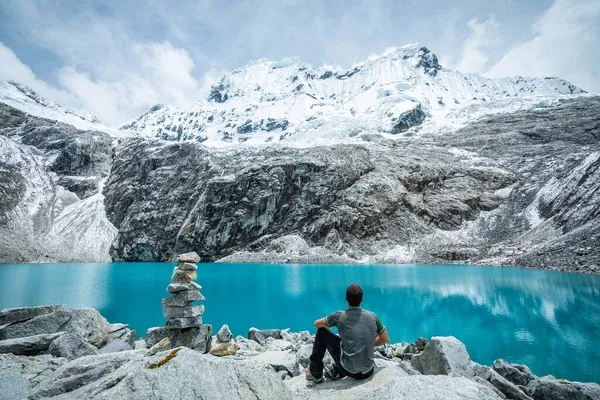
Huascarán is the tallest mountain in Peru; it is among the most dramatically beautiful mountains in the Andes Mountain Range. Its massive glaciers, jagged ridgelines, and expansive alpine valleys make Huascarán dominate its surroundings. Generally, those who can find vantage points and hiking trails nearby will enjoy amazing turquoise glacial lakes, spectacular ice formations, and seemingly endless mountain vistas from both vantage points and hiking trails.
In addition to being tall, Huascarán is also a stunning example of alpine scenery, and its sheer size is an important aspect that contributes to Huascarán National Park’s skyline. Accordingly, photographers, trekkers, and outdoor enthusiasts often use this mountain as the focal point for photographs, trekking, or enjoying a traditional view of the snow-capped peaks of the Andes.
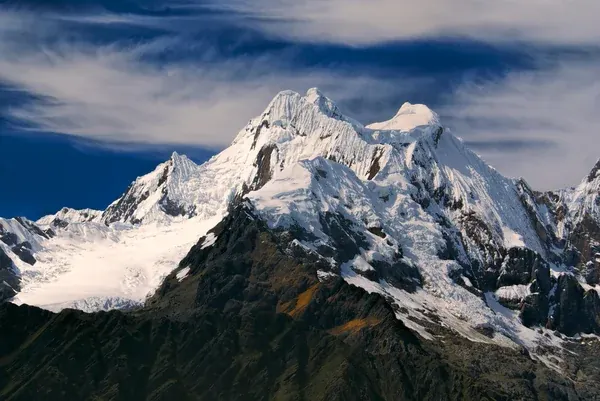
Known around the globe as one of nature's masterpieces, many climbers believe the North face of this mountain to be one of the most magnificent sights in the world thanks to it's nearly perfect shape—the triangular pattern is created when the sun shines off the almost 90-degree ice walls (this creates a bold silhouette against the blue sky). There are few mountains as recognizable throughout Peru as Alpamayo.
Alpamayo has multiple vantage points allowing climbers to take breathtaking photographs of the surrounding vistas and the interrelations of the sun and white snow. In addition, because of its imposing stature and the range of its ice-on-ice transitions, it is an icon of the Andes.
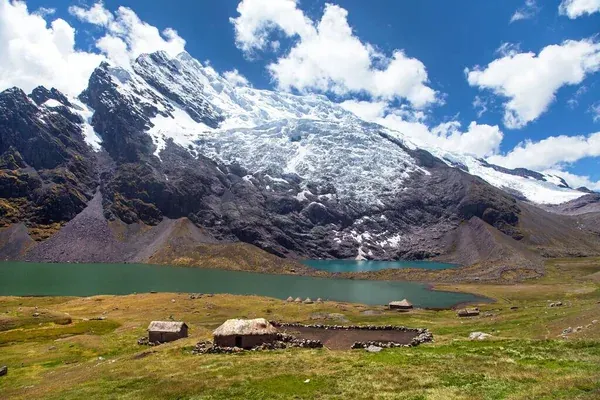
Ausangate has a powerful presence and stands apart against the stunningly beautiful and colourful landscape that surrounds it! It is located southeast of Cusco in Peru and is surrounded by bright mineral slopes, glacial formations, and incredible lagoons located at very high altitudes. The colours and textures of the various rocks provide a striking and unique look compared to the snow capped peaks.
The dramatic features of the area surrounding Ausangate are enhanced by the high, flat altiplano plains creating wide open spaces with uninterrupted views. The scale, colour and isolation of Ausangate create one of the most spectacularly visual mountains in Peru.
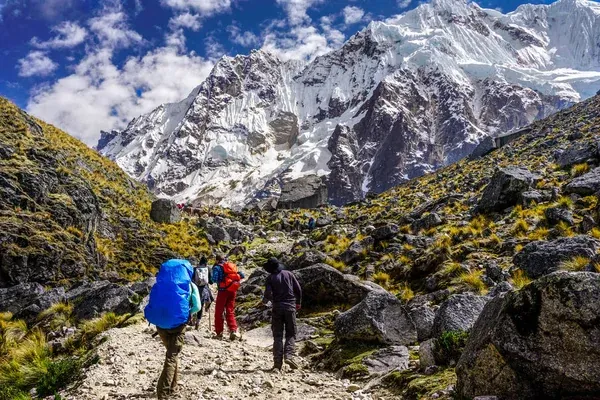
Salkantay is an iconic mountain located in southern Peru and one of the most well-known trekking routes in this region. The vast glaciers, high cliffs, and steep slopes create a tremendous visual effect as people hike through the various elevations and ecosystems of the area.
The scenery: the mountain is snow capped at the very top to the lush valleys below and the rocky passes in between, giving hikers a continuously changing view of the mountain. There are numerous places to view Salkantay's beautiful silhouette and view its landscapes at different angles; therefore, hikers will find that Salkantay has some fantastic views at all times during the trek.
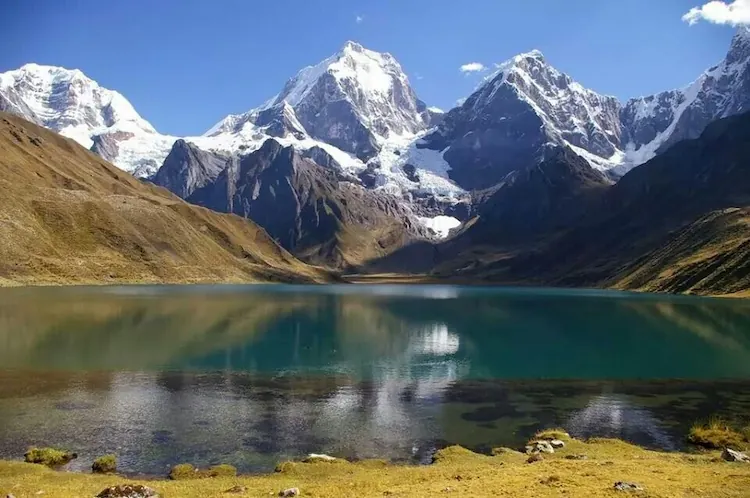
Yerupajá is Peru's second highest mountain and also one of the country’s largest natural features in Cordillera Huayhuash. With its very steep slopes and remote position, it provides a truly wild and untouched environmental experience for all visitors to this scenic wonderland. The view from the summit is equally stunning, with sharp ridges and deep ravines dominating the landscape.
The solitude surrounding the mountain further enhances the experience, as there are very few signs of human habitation around the base. All visitors can enjoy some amazing and very rugged mountain scenery while visiting Yerupa.
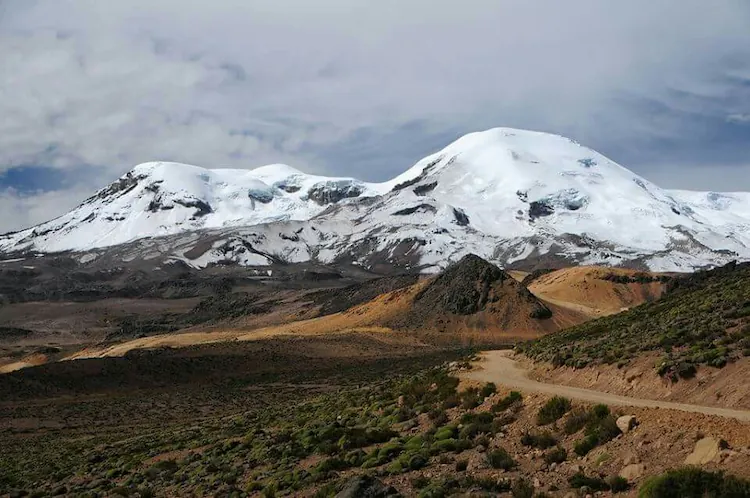
The massive Volcanic Mountain, Coropuna, dominates Peru's southern desert. The broad, glaciated summit of Coropuna offers a unique juxtaposition against the dry terrain below; it's a dramatic visual phenomenon that few other peaks in the Andes can offer.
Coropuna stands out from the surrounding landscape by virtue of its impressive scale and grandeur - from afar, it appears to fill the horizon and provide the viewer with an expansive view of the earth's curvature. The mixture of volcanic elements, glaciers, and desert creates a striking and beautiful effect.
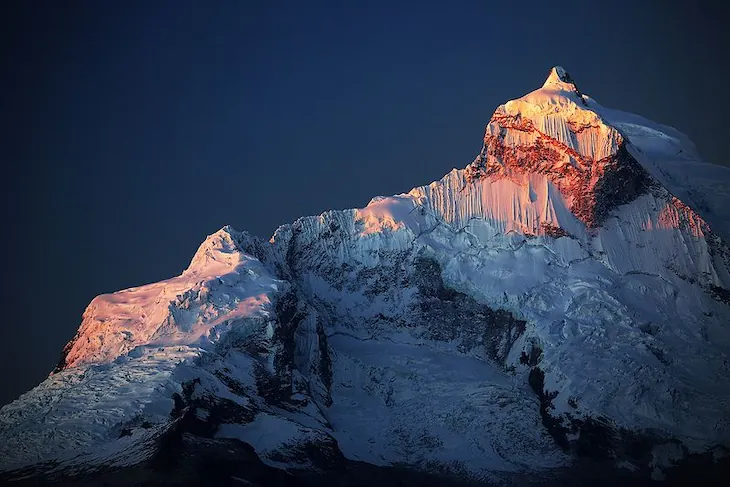
The prominent peaks of Huandoy within the Cordillera Blanca have powerful features as well as several summit points. It is surrounded by glaciers, high alpine lakes, and very deep valleys with a large number of different layers and textures of landforms.
Being close to other well known peaks adds to the feeling of being deep within the high mountains. Huandoy has many dramatic views of ice, rock, and water providing it with many of the amazing and scenic views available in this region.
You may also like: Travel guide to Peru in February
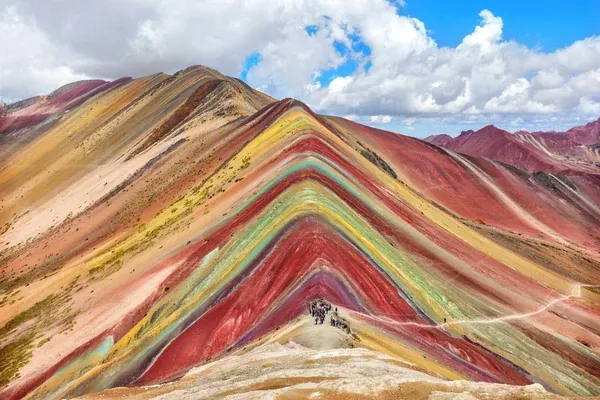
Peru's Vinicunca has a unique appearance and is recognised for its colourful mineral layers that give the mountain a rainbow-like appearance. The landscape surrounding the mountain is also composed of rolling, colourful highland vistas and provides a sense of extraordinary beauty.
Additionally, this mountainous area offers sweeping views of the Andes, which are populated by llama herds, as well as some distant peaks. The combination of colour and scale provides for a unique mountain landscape that has become one of the most photographed sites in Peru.
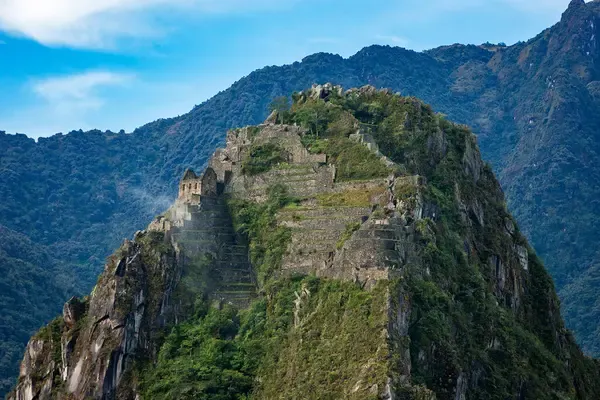
The Machu Picchu citadel has Huayna Picchu towering over it. At the top of Huayna Picchu, visitors will get to experience one of the most beautiful views in Peru: the ancient ruins of Machu Picchu, the mountains surrounding it, and the twisting Urubamba River far below.
The scenery is very dramatic due to the large vertical drop and the lush green landscape. From Huayna Picchu, you can have a different view of the scale and location of the Machu Picchu ruins.
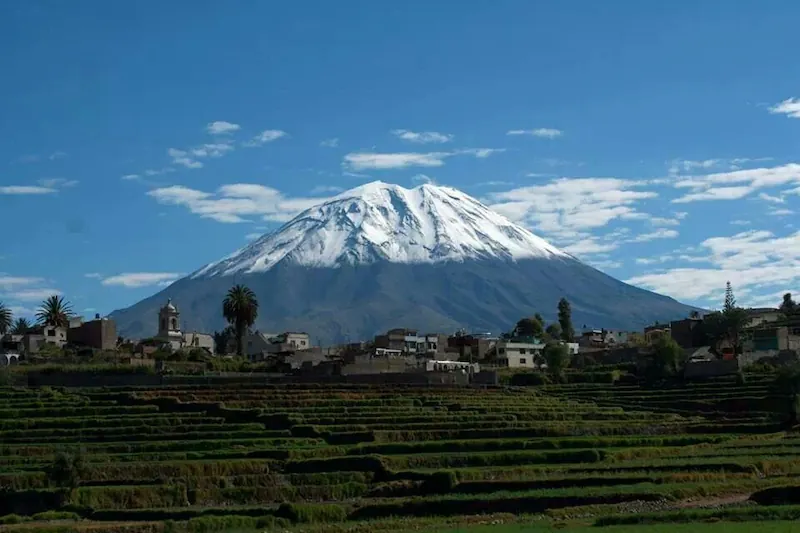
The summit of Misti Volcano offers spectacular views of the city of Arequipa and the surrounding Andean landscapes. From the top, you can admire the sprawling urban area below, neighboring volcanoes like Chachani and Pichu Pichu, and distant highland valleys, all framed by the dramatic volcanic cone of Misti itself.
Unlike many other mountains, Misti combines both geological grandeur and accessibility, making it a striking and memorable peak to climb. The panoramic vistas from the summit provide a unique perspective on the contrast between Peru’s volcanic terrain and its inhabited valleys, leaving a lasting impression on every visitor.
Peru has some of the most breathtaking and varied mountaineering and trekking trails within South America. These trails feature glacial valleys, high mountain passes, remote alpine terrain, and culturally progressive areas within the Andes. All of these trekked routes present different blends of incredible scenery, physical challenge, and jaw-dropping experiences.
The Santa Cruz Trek is one of the most well-known hiking routes in the Cordillera Blanca. Thanks to its outstanding beauty and easy access, the trail features turquoise glacial lakes, snow-capped peaks, and wide valleys. Along the way, these landscapes can be admired from multiple points on the route. In addition, several viewpoints allow hikers to enjoy impressive mountain scenery throughout the entire trek. As a result, this route offers a classic high-altitude experience without requiring advanced mountaineering skills.
The Huayhuash Circuit in Peru is considered one of the world’s most prestigious hikes. This legendary route circles some of the largest, most remote, and most beautiful mountains in the country, including Yerupajá. Hikers enjoy pristine views, high-altitude mountain passes, crystal-clear glacial lakes, and the vast, dramatic landscapes of the Andes.
The Salkantay Trek is also another of the most beautiful alternatives to the Inca Trail. The main highlight of this trek is Salkantay Mountain, which offers spectacular views of some of South America’s most impressive high-altitude peaks. Along the route, hikers experience a wide variety of climates and landscapes. These include snow-capped mountains, vast grasslands, and forests filled with vibrant colors.
The Ausangate Trek is one of the highest hiking routes in southern Peru, offering breathtaking views of remote Andean landscapes. Hikers discover glacial lakes, vast grasslands, traditional Andean communities, and mineral-rich terrain throughout the journey. This combination of scenery and culture makes the trek a truly unique experience. Thanks to its diverse scenery and flexible itineraries, this trek suits hikers of different experience levels. As a result, everyone can enjoy the beauty of the surrounding mountains.
You may also like: Carnivals in Peru 2026: the most colorful celebrations
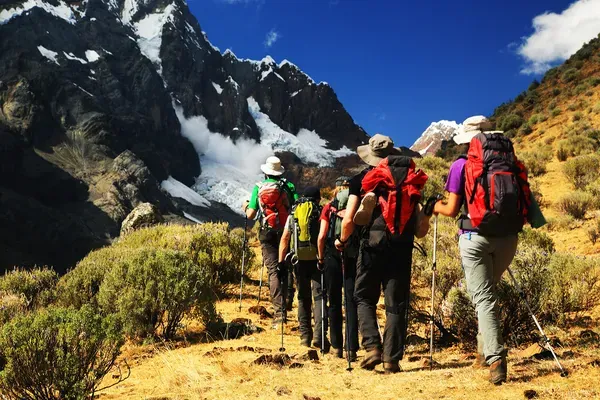
Proper equipment is essential when exploring the mountains in Peru, as weather conditions and terrain can change rapidly. Being well prepared ensures safety, comfort, and a more enjoyable experience in high-altitude environments.
Trekking poles help reduce impact on knees and provide stability on steep ascents, descents, and uneven terrain. They are especially useful on long treks and high mountain passes.
Sturdy, well-fitted hiking boots with good ankle support and strong grip are essential for the trek. In addition, hikers should wear waterproof boots, as the trails may include snow, stream crossings, or muddy sections.
Layered clothing allows travelers to adapt to changing temperatures throughout the day. A combination of thermal layers, insulating jackets, and waterproof outer layers is ideal for mountain conditions.
Warm gloves and hats are necessary for cold mornings and high elevations, while sun hats help protect against strong ultraviolet radiation during the day.
A comfortable backpack is important for carrying daily essentials. Staying hydrated is crucial at high altitude, so water bottles or hydration systems should always be included.
Maps, GPS devices, or trekking apps can be helpful, especially on remote routes. First aid supplies and emergency equipment add an extra layer of safety in mountainous terrain.
Sun exposure is intense at high altitude. Sunglasses, sunscreen, and lip balm with UV protection are essential items for any mountain trek in Peru.
The highest mountain in Peru is Huascarán, which reaches an elevation of 6,768 meters above sea level. It is located in the Cordillera Blanca and is one of the most iconic peaks in the country.
Some of the best mountains and regions for trekking include the Cordillera Blanca, the Huayhuash range, Salkantay, and Ausangate. These areas offer a wide variety of routes with spectacular views and diverse landscapes.
Hiking difficulty in the mountains in Peru varies widely depending on the route, altitude, and terrain. Some treks are suitable for beginners with good physical condition, while others involve high mountain passes, long distances, and challenging weather conditions. Proper preparation and route selection are key factors for a successful experience.
While hikers can complete some well-marked trails independently, hiring a guide is highly recommended for high-altitude or remote mountain routes. Local guides offer navigation support, ensure safety, and share valuable knowledge about the terrain, weather, and cultural context. As a result, they enhance both safety and the overall trekking experience.
Yes, altitude sickness can affect some travelers, especially above 3,000 meters. Taking time to acclimatize, staying hydrated, and ascending gradually can help reduce the risk.

Hi, I'm Kevin, a Peruvian who loves Andean cultures and is proud of my country. On this blog, I share useful and reliable information so you can discover Peru's history, nature, and authentic traditions.
Leave a comment