Chat to a Andean Road Peru
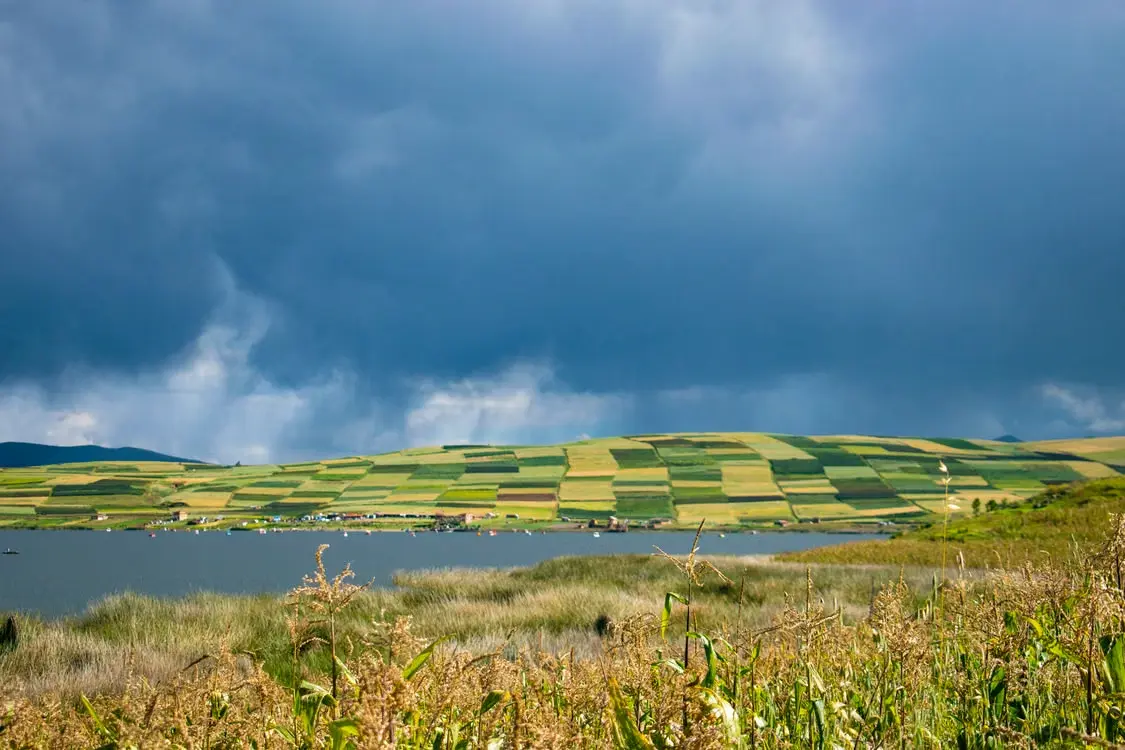
The Inca civilization created one of the most sophisticated agricultural systems in the ancient world in the difficult high Andes of South America. Inca agriculture surpassed mere food production by adapting to incredibly extreme landscapes, creating terracing along the mountain slopes, creating irrigation systems that still amaze scientists today.
Inca agricultural achievements allowed the Incas to sustain millions of people across their eventual empire and grow an incredible number of different crops. These crops still feed Andean culture, and our World, including potatoes and quinoa and corn. Many Andean communities still maintain and use these ancient agricultural practices, while developing their knowledge and the spirit of sustainable agriculture.
You might be interested in reading: Mita System: How it shaped the economy of colonial Peru
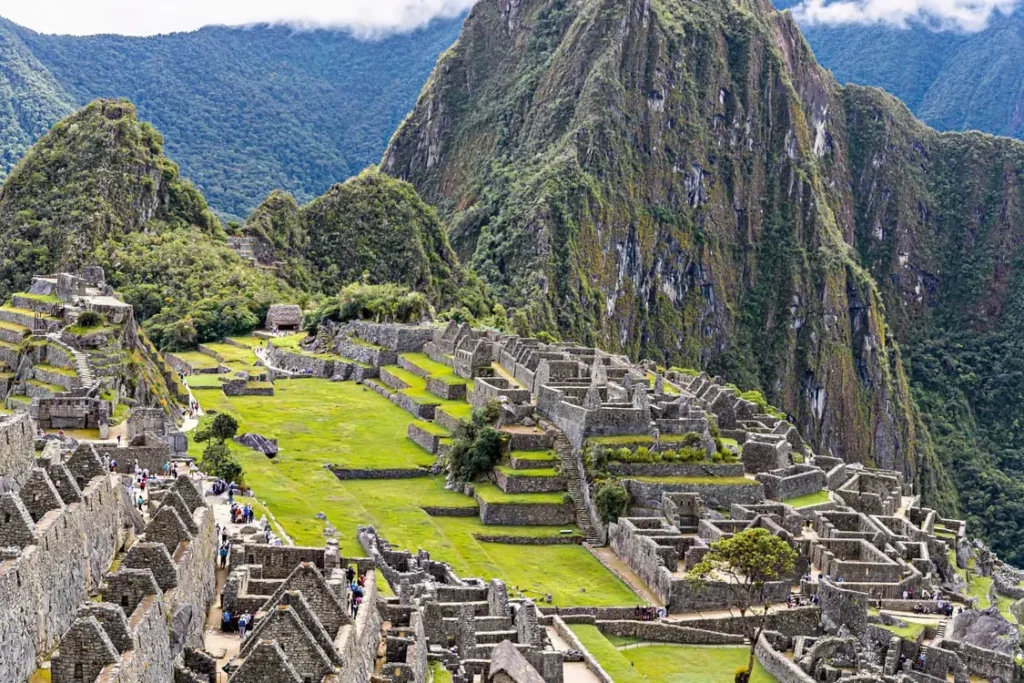
Inca agriculture was the basis for the largest empire in pre-Columbian America. More than any other civilization, the Incas did not have lush valleys or great plains to transform agriculture. The Incas were working in the rugged Andes. They faced agricultural challenges based on a set of difficult terrain with steep mountains, soils that were thin and years of climate collapse.
What made Inca agriculture unique was that they quickly learned to adapt to their environment, rather than try to manipulate the plants and surrounding areas to modify the environment around them. The Incas built terraces that gradually rose from the high slopes of the mountains creating flat ground for planting crops. Their agricultural advancements and creativity extended to developing advanced irrigation systems including channels for water and reservoirs that maintained great hydration even in arid regions.
Another part of the uniqueness of their agriculture was that the Incas cultivated such a wide variety of agricultural products. The Andes had varying altitudes and climate differences; as such, the Incas increased the variety that would grow at each altitude (including potatoes, corn, quinoa, beans and coca leaves). Each level of the Andes became a specific level of agricultural zone. The Incas created one of the most effective and sustainable agricultural systems in ancient history.
Inca agriculture's most noteworthy innovation was terraces, or andenes. With these stone-built platforms, many once-steep mountain slopes became a series of fairly flat steps of agricultural land, which restored productivity to soils eroded from washing down slopes while providing each as a flat surface to farm on at altitude. These platforms also helped to conserve heat from solar radiance and consequently kept crops from succumbing to cold nights in the Andean region.
The Incas were exceptional civil engineers and their works were visible from the canals, aqueducts, and reservoirs used to capture melting glacier, melting snow, and mountain spring water. Such systems enabled them to farm in many areas without productive soil, especially dry valleys. The systems also provided a supply that could produce food products at all times of the year.
Inca methods for soil management systems also included crop rotation to reproductive levels after soil has been depleted, the use of natural fertilizers and soil amendments such as guano or compost, application of fertilization on land with soils chosen for their location and altitude. Overall, these methods increased plant product but also entailed an understanding and respect for ecological equilibrium or sustainability.
The variety of crops in Inca agriculture was incredible, reflecting both the ingenuity of the Incas and the range of climates in the Andes. By growing at different altitudes, they made ecological zones of specific plants, allowing for food security throughout the empire.
Potatoes, maize, and quinoa were staple crops that, together, provided the backbone of the Inca diet. The potato has probably more varieties than any other food crop. Every potato was adapted to a specific soil and location (temperature). Quinoa, or "gold of the Andes," was a protein-rich alternative to grains. The maize was consumed as is, but also was used for chicha, the traditional fermented drink.
Beans, peppers, squash, peanuts, and coca leaves were grown as well, each with cultural and practical significance. The variety of crops allowed the empire to sustain millions, resist drought and climate fluctuations, and establish one of the most sustainable food systems in known history.
Inca farming methods succeeded because they turned the challenging Andes into productive farmland. By combining engineering, ecological knowledge, and communal labor, the Incas created one of the most efficient agricultural systems of the ancient world.
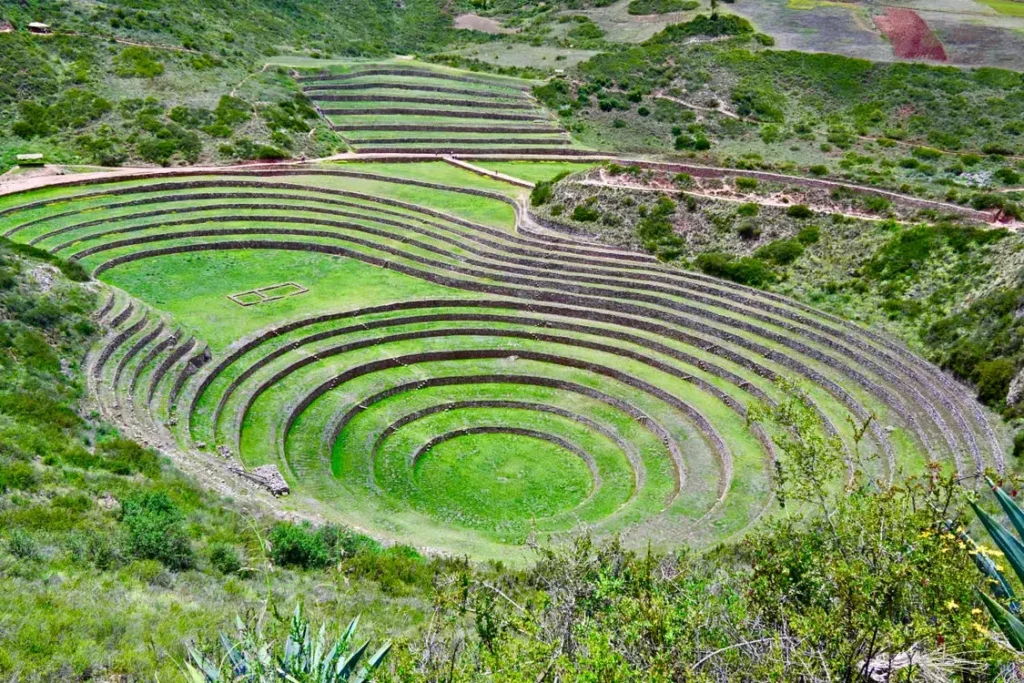
Terracing was probably the most notable achievement in Inca agriculture. With the use of stone walls, the Incas transformed steep mountains into flat steps suitable for growing crops. This technique prevented soil erosion, strengthened slopes, and offered protection from avalanches. In addition, terraces retained heat during the day, which helped shield crops from freezing overnight. Some terraces had drainage systems to eliminate waterlogging. Terracing that can still be seen today can be found at sites such as Moray or Pisac in the Sacred Valley,. Many terraces are still used by Andean farmers.
The Incas developed irrigation systems that included canals, aqueducts, fountains, and reservoirs. They engineered systems to move water from natural springs, lakes, and melting glaciers to farmland that was many miles away. In and around Tipón, near Cusco, visitors can still see gravity-fed waterways, carved into the rock that carries water evenly out of fountains, a perfect example of the accuracy in hydraulic engineering of the Incas. This accuracy of irrigation systems allowed the Incas to farm both at high altitude plateaus and in the dry valleys of the Andes Mountains and helped guaranteed food supply in a lot of different climates.
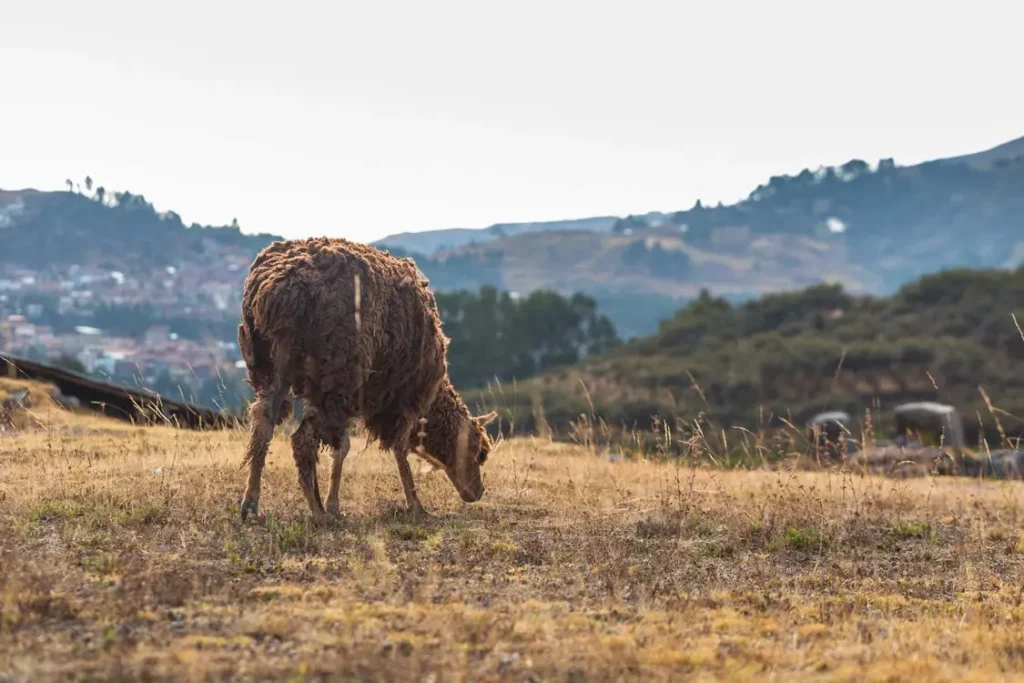
In order to maintain a healthy soil for the sustainable population of the empire, it was vital. The Incas used crop rotation by cycling through different crops in order to utilize land and prevent soil exhaustion. They also supplemented the soil with llama dung, compost, and guano that they gathered from coastal islands. This meticulous system praised the land for not only continued fertility but allowed for greater yields and agriculture to thrive through bad harvests or changing weather.
One of the many interesting methods of farming created by the Incas was vertical farming, otherwise known as altitudinal zonation. The high altitude of the Andes created varied ecological niches and the Incas used these niches to the fullest by planting crops specific to the right elevations; potatoes and tubers in the highlands, quinoa and barley somewhere in mid-altitude, maiz and beans in the lower valley. This system served to diversify food and lessen the risk of food shortage, as poor harvest in one zone could still be compensated by crops grown at another altitude.
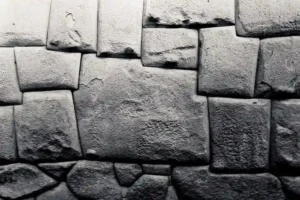
You might be interested in reading: Twelve Angled Stone: Cusco’s Iconic Inca Landmark
The terraces, or andenes, are among the most fascinating legacies of Inca agriculture. Beyond their beauty, the Incas designed terraces with incredible precision. They built each one with layers of stone, gravel, sand, and fertile soil. This structure created a natural drainage system that prevented flooding and kept crops healthy, even during heavy rains.
One curiosity is that the terraces also acted as climate regulators. Their stone walls absorbed heat during the day and released it at night, protecting crops from frost. In addition, by farming at different altitudes, the Incas could grow a wide variety of plants in a relatively small area, turning mountains into “vertical gardens.”
Perhaps the most intriguing site is Moray, near Cusco, where circular terraces descend like an amphitheater. Archaeologists believe it was an agricultural laboratory, where the Incas experimented with microclimates and crop adaptation. This shows how terraces were not only practical but also centers of scientific innovation.
Many Andean communities still show the influence of Inca agriculture today. Farmers continue to use terraces, canals, and traditional planting techniques inherited from their ancestors, proving the resilience and sustainability of these practices. In places like the Sacred Valley, locals cultivate potatoes, quinoa, and maize much as the Incas did centuries ago.
These methods are not just a connection to the past they also provide solutions for modern challenges. Terraces help prevent soil erosion and manage scarce water resources, making them valuable in the fight against climate change. Many communities are now reviving ancient practices to ensure food security and preserve biodiversity.
Beyond farming, the legacy is cultural. Andean communities still celebrate agricultural rituals and festivals linked to planting and harvest seasons. Through these traditions, Andean people show a worldview where farming connects directly to spirituality and respect for nature. In this way, the Inca legacy remains alive, shaping both the land and the identity of the people who inhabit it.
Agriculture was the main driver of the Inca Empire's rise because it guaranteed food security for armies, administrators, and builders. This foundation sustained state life. The Incas transformed the landscape by creating terraces, developing irrigation systems, and farming across diverse ecological zones. With these methods, they turned unproductive land into fertile fields.
This ensured stability even during prolonged military campaigns or when bad weather destroyed crops. Thanks to agriculture, the empire had the strength to expand throughout the Andes and secure control over new populations and territories.
Along the mountains, the Incas stored surplus crops in qollqas, state warehouses designed for times of famine, drought, or poor harvests. These storages had multiple purposes. By collecting and redistributing food, the state fostered loyalty among conquered peoples. Agricultural ceremonies also reinforced unity across diverse cultures.
Agriculture was not only the economic foundation of the empire. It also became a political and social tool that allowed Inca rulers to consolidate power and expand their domain.
You might be interested in reading: The beauty of peruvian crafts: a journey through tradition
The tale of Inca agriculture is not just a tale of the past; it is a living legacy, one that continues to shape the Andes. The Incas transformed one of the most difficult landscapes on earth, through terraces, irrigation, and sustainable agricultural practices, into a thriving empire. The Incas' capacity to adapt, innovate, and work with rather than work against nature opens paths for present-day change.
From the potatoes and quinoa we still grow on Andean fields to the terraces that hold soils in place, the Incas’ legacy can be seen in daily practice and in cultural practice. For the traveler, going to sites such as Moray, Pisac, or Tipón is not simply a journey into the past, these sites show the applicant continue to benefit from ancient knowledge.
A reputable Peru tour operator can facilitate the exploration of these wonders and facilitate an experience that ties deeply to the heritage of the Andes and satisfies an array of sustainable travel values in a single trip.

Hi, I'm Kevin, a Peruvian who loves Andean cultures and is proud of my country. On this blog, I share useful and reliable information so you can discover Peru's history, nature, and authentic traditions.
Leave a comment